

Hyper Effects SEO Service In Kitsap County
At Hyper Effects, we believe in empowering our clients through education. Even before you choose Hyper Effects for your SEO services, we have created this informative piece of content to help you easily learn more about SEO in detail. This content serves as a complete guide for Kitsap County businesses to understand and implement SEO on their own, enabling you to take charge of your online presence. An educated business owner is an empowered business owner!
A Bit About Hyper Effects
At Hyper Effects our team of experts provide effective and strong solutions all over Kitsap County for your SEO, Social Media, Google Ads, YouTube Video Marketing, Video Production, Web, and App development needs. Hyper Effects helps business owners in Kitsap county achieve business success.
Hyper Effects is one of the best marketing and web development companies in Kitsap County. It is a well-known name for SEO in Kitsap County and in several cities, such as Silverdale, Bremerton, Port Orchard, Poulsbo, Kingston, Seabeck, Southworth, Hansville, and Bainbridge Island. We also provide services in nearby areas such as Seattle, Bellevue, and Tacoma.
Hyper Effects helps small businesses achieve their goals by making their imagination come to life. "Getting It Done!" is literally our slogan!
WHAT IS SEO?

Here's what most Kitsap business owners don't realize: SEO has stopped being about "ranking for keywords" and started being about "being trusted by AI."
SEO stands for search engine optimization. At its core, it still means improving your online visibility when customers search for what you do. But the how and why have fundamentally changed in ways that caught most small businesses flat-footed.
What SEO Actually Is in 2026
After more than a decade doing SEO for Kitsap County businesses, I'll be direct: SEO in 2026 is about building a website, brand, and content that AI systems trust enough to recommend.
Your website must be technically sound and AI-readable. Slow WordPress installs, broken mobile experiences, and outdated infrastructure don't just hurt rankings, they block AI visibility entirely. Google, OpenAI, Anthropic, and Perplexity all send crawlers to your site. If they can't parse your content, you don't exist to their systems.
Your content must directly answer specific questions. I've watched businesses waste months creating vague, keyword-stuffed pages. When someone searches "how much does HVAC repair cost in Kitsap County," answer that in the first paragraph. Direct. No filler.
You need genuine expertise signals. Author credentials, case studies, visible licensing, these matter more than backlinks now. AI evaluates trustworthiness before ranking anything.
Finally, your brand must be mentioned across trusted sources. Local news, industry publications, community mentions. AI aggregates what the internet says about you and uses that as a trust filter.
Google's crawl-index-rank process hasn't changed. But the ranking criteria have flipped. Being cited in AI Overviews now beats ranking #1 for traditional search. That's the game in 2026.
What are the various types of SEO terms?
White-hat SEO is like being a good neighbor online. You create valuable content for your customers, answer their questions honestly, and build friendly connections with other websites. Search engines reward this because it helps users find helpful information. Black-hat SEO is like taking shortcuts: tricking search engines instead of helping people. It might work temporarily, but eventually, you get caught and penalized. Stick to white-hat SEO, build trust, and your website will naturally shine!
Imagine climbing a mountain to reach the top (search rankings). Black-hat SEO is like taking shady shortcuts: hidden paths, fake gear, even pushing others down. It might get you up fast, but it's risky, hurts others, and risks getting you banned (removed from search). Play fair with "white-hat" SEO: create quality content, build genuine connections, and climb steadily. Slower, but safer and sustainable for your business in the long run.
Gray-hat SEO is like taking a less traveled mountain path to reach the top (search rankings). It's not as risky as the dangerous shortcuts (black-hat), but it might wander close to bending the rules (think hidden content or keyword tricks). It can work sometimes, but search engines might catch on and penalize you. For long-term success and safety, stick to the clear, well-marked trail of white-hat SEO: creating valuable content and building genuine connections.
On-page SEO is like making your website the star of the school play. It's about having all the elements on-point: a clear title that grabs attention (title tag), a captivating intro that tells everyone what you're about (meta description), and well-written content that uses the right keywords (like your name and what you do). Don't forget to organize it all well with headings and links (like helpful signs backstage). Search engines love websites that are easy to understand and navigate, so they'll show you off to more people!
Think of your website as a new store. On-page SEO is making it look great inside. Off-page SEO is getting people to talk about it outside! This means positive reviews, mentions on social media, and links from other websites. These "votes of confidence" tell search engines your store is worth visiting, bringing in more customers (website traffic). Focus on creating valuable content, building relationships, and earning mentions naturally, and your website will attract more attention online!
Think of Technical SEO as the foundation of your entire online presence. If the foundation is cracked, even the best content will not rank. For Kitsap businesses, technical SEO covers three critical areas:
1. Core Web Vitals (Google's speed and experience scores): Google measures your site on three key metrics, how fast your page loads (LCP), how stable your layout is (CLS), and how quickly your site responds when someone taps or clicks (INP). INP replaced the older FID metric in March 2024. If your site scores poorly on any of these, Google will rank competitors above you, even if your content is better.
2. Mobile Optimization: Over 65% of local searches happen on smartphones. Google uses mobile-first indexing, meaning it ranks your mobile site, not your desktop site. If your website is hard to use on a phone, you are actively losing customers.
3. Structured Data & Schema Markup: This is code added behind the scenes of your website that tells Google exactly what your business does, where you are located, what your hours are, and what reviews you have received. Businesses with proper schema markup are far more likely to appear in rich results, AI Overviews, and the Google Local Pack.
At Hyper Effects, we run full technical audits for every Kitsap client before building any content strategy, because no amount of great writing will overcome a technically broken website.
Imagine your website is a store, but you want to reach customers worldwide. International SEO is like opening new stores in different countries, each needing local adjustments. You translate your signs, stock local products, and speak the local language. It's about optimizing your website for different languages, search engines, and cultural preferences to attract customers from all over!
Imagine your business is a hidden gem in town. Local SEO is like putting up a neon sign with "Open!" and balloons outside, but for online searches. It helps people searching for businesses like yours nearby easily find you. This involves claiming your Google My Business listing, getting good reviews, and using local keywords on your website. When people search for "best [your service] near me," your business shines bright, attracting more customers!
Imagine your online store is a hidden gem. Ecommerce SEO is like putting up clear signs and maps to guide shoppers directly to your door. It involves using relevant keywords in your product descriptions, building easy-to-navigate categories, and making your website mobile-friendly. Search engines reward these efforts by showing your store to people searching for what you sell, just like a clear map helps people find your hidden gem!
Content SEO is like being a magnet for customers online. You create informative, engaging content that answers people's questions and solves their problems. This "good stuff" attracts visitors, keeps them coming back, and tells search engines your website is valuable. Imagine your website as a shop - content SEO is stocking it with interesting products people actually want, not just filling it with junk to trick search engines. It's honest, helpful, and builds trust, leading to better rankings and more customers!
Imagine most of your customers browse the web on their phones. Mobile SEO is like making sure your website looks great and works smoothly on those screens. It includes things like clear buttons, easy navigation, and fast loading times. If your website is frustrating to use on a phone, people are likely to click away and visit your competitor instead. So, mobile SEO isn't just about Google; it's about making sure your website is user-friendly for everyone, no matter what device they're using!
Imagine someone trying to mess with your online shop! Negative SEO is like that. Competitors or others might try to harm your website's ranking in search results by creating fake links or spreading bad rumors. It is important to stay aware and protect your site with good security, but focus on building your business with great content and genuine connections.
This is the newest and fastest-growing type of SEO. When people search using AI tools, like asking ChatGPT 'what is the best plumber in Bremerton?' or using Google's AI Overview feature, they get a single AI-generated answer instead of a list of links. GEO is the practice of optimizing your content so that AI systems choose to mention and recommend your business in those answers. It involves writing clear, factual, expert content; earning mentions on trusted local websites; and using structured data so AI can easily understand what your business does and where you serve. For Kitsap businesses, this is one of the biggest opportunities in 2025 and beyond, and most local competitors have not started yet.
How Does SEO Work?

Search engines like Google and Bing have special robots called bots that explore the internet by visiting different websites. These bots gather information from each webpage they visit and organize it into a big database called an index.
Think of the index as a massive library where a librarian can quickly find a specific book or webpage to help you find exactly what you need.
In other words, when you search for something on Google, the search engine doesn't actually search the entire internet in real-time. Instead, it looks through its index to find the most relevant webpages that match your search query. This makes the process much faster and more efficient.

Google does not search the entire internet from scratch every time someone enters a query. That would require too much time and computing power. Instead, Google builds and continuously updates a massive search index containing information collected from webpages across the internet.
According to Google Search Central, Google Search generally works through three main stages: crawling, indexing, and serving search results.
How Do Search Engines Discover Webpages?
Google uses automated programs called crawlers, including Googlebot, to discover webpages. These crawlers follow links, revisit known pages, read sitemaps, and identify new or updated content.
When Googlebot visits a webpage, it may collect information from the page’s text, images, videos, links, headings, structured data, and other accessible elements. A page must also be technically available to Google. Problems involving robots.txt rules, noindex tags, server errors, broken links, or inaccessible JavaScript can prevent proper crawling or indexing.
What Happens During Indexing?
After discovering a page, Google analyzes its content to understand what the page is about. It may examine:
- The main topic and supporting information
- Page titles and headings
- Text, images, and videos
- Internal and external links
- Structured data
- Language and geographic relevance
- Duplicate or highly similar content
- The page Google considers to be the canonical version
If Google determines that the page is suitable for indexing, information about it may be stored in Google’s search index.
Think of the index as an enormous digital library. Google does not read every book in the world each time someone asks a question. It first organizes information so its systems can quickly identify the pages most likely to provide a useful answer.
How Does Google Rank Search Results?
When someone performs a search, Google’s automated ranking systems examine pages in its index and evaluate many factors and signals. According to Google’s ranking systems guide, these systems analyze hundreds of billions of webpages and other content to produce relevant results in a fraction of a second.
Depending on the search, Google may consider:
- How closely the content matches the searcher’s intent
- Whether the page provides useful and original information
- The experience and knowledge demonstrated in the content
- The reputation and reliability of the website
- The meaning and context of the query
- The searcher’s location, language, and device
- Links and references from other relevant websites
- Mobile usability and overall page experience
- The freshness of the information when recent content is needed
- Whether the page is secure, accessible, and technically functional
No single factor guarantees a top position. Rankings are based on multiple systems working together, and the importance of each signal can change depending on the query.
How Has AI Changed Google Search?
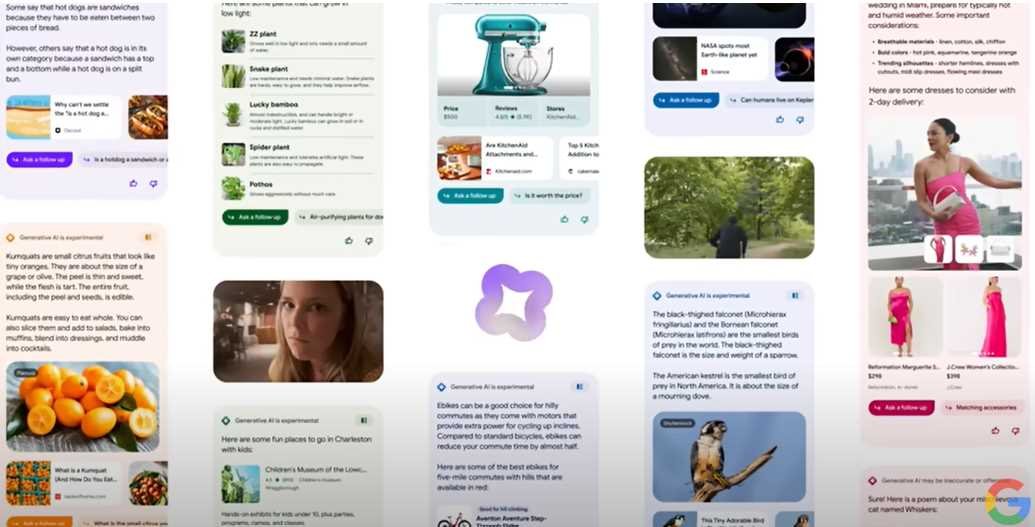
Search results are no longer limited to a list of traditional blue links. Depending on the query, Google may display local business listings, featured snippets, videos, images, shopping results, discussion forums, knowledge panels, and AI-generated summaries.
This means modern SEO is not only about using keywords. A webpage must clearly explain its subject, answer real questions, demonstrate firsthand knowledge or credible expertise, and make important information easy for both people and search systems to understand.
For a local business in Bremerton or Kitsap County, this can include accurate service information, original local content, consistent business details, customer reviews, relevant location pages, descriptive images, and a properly maintained Google Business Profile.
What Does Hyper Effects Do?
At Hyper Effects, the SEO process begins by helping search engines discover, access, and understand a website correctly. Content is organized around the questions and needs of real customers, while titles, headings, links, images, structured data, mobile performance, and technical elements are optimized to support crawling and indexing.
The goal is not to make ranking “frictionless” or promise a particular position, since no SEO company can guarantee how Google will rank a page. The goal is to remove technical obstacles, improve content quality, establish local relevance, and give each page the strongest reasonable opportunity to appear in traditional search results, local results, and AI-powered search experiences.
How SEO Will Change in 2027
WHAT ARE THE GUIDELINES OF SEO?
-
1. Choosing the proper keywords
Search engines establish your website contents with the assistance of keywords. These area units are sometimes closely associated with the search terms entered by the users in search engines. For websites and blogs, you may conduct a radical analysis of the keywords related to the subject. You'll build keyword analysis tools like Google AdWords Keyword Tool to realize the foremost in style keywords. Finding profitable keywords for your business can be challenging, but with the right tools and strategies, it can be made easier. A quick tip - the best keyword may not have too much traffic but it has good conversation.
-
2. Readability
Please keep in mind that you are a unit, initially and foremost, writing for your readers, not search engines. You may realize it is troublesome to use many popular keywords grammatically. However, you can not get it very affordable to skip it all at once. Though search engines explore the keywords, they might wish the readers to read quality content. Therefore, you may ensure that the content is attention-grabbing and adds value to the readers, rather than simply stopping it short with overused keywords. Keywords mustn't control the content flow.
-
3. Content connectedness
Make sure you simply use keywords while maintaining the connectedness to your content. Search engines use a variety of methodologies, thus being ready to observe content created with the only real purpose of getting a sensible ranking. Not solely can such content become indecipherable; however, the likelihood is that your website gets blocklisted by search engines.
-
4. Keyword placement
Overusing keywords isn't a decent plan, as your readers can recognize your intentions directly. Rather than exploiting your keywords at some stage in the content, you'll use them additional within the beginning few paragraphs and as subheadings. Within the alternative components of your article, you'll be able to use different similar phrases rather than keywords then.
-
5. Build short and crisp paragraphs
Users hate reading massive blocks of paragraphs. Chunks of text can make your article look boring. They could not browse your post or article utterly, which might be a waste of time and effort. The contents can become additional decipherable if the paragraph sizes are restricted to four to five lines.
-
6. Use bullets and Listing
Most of your readers are doubtless to own a brief span, and they won't be interested in reading the entire content of your article. They might instead like skimming through bullet points if they're crisp and laconic. Therefore, it might be a decent plan to use bullets and listing whenever doable.
-
7. Build subheadings
Subheadings will be valuable in directing readers to the precise points they're curious about. Moreover, you'll conjointly use the keywords as subheadings so the reading flow doesn't get interrupted.
-
8. Correct linking
If you have to link any of your content to another page, make sure that you justify that page's connectedness. If the page you're linking to isn't relevant to what you mention in your content, it might surely grab the readers. You'll lose your credibility with those readers, which are some things that are de facto troublesome to regain.
-
9. Optimize for Mobile Devices
With the increasing prevalence of mobile internet usage, websites must be responsive and optimized for mobile to provide a seamless user experience. Mobile optimization is vital for SEO success. It is very simple to learn the importance of mobile-optimized websites. As a mobile user, you may encounter websites with difficult-to-read text that requires zooming in or out for proper reading. Would you like to revisit the website for any future information? Maybe you say "No". That's a simple example to help you understand the significance of having a website that is optimized for mobile devices.
-
10. Focus on Quality Content
Focusing on the creation of quality content is paramount for SEO in 2024. Content should be informative, engaging, and relevant to the audience’s interests. Quality content is a cornerstone of effective SEO strategies. As AI content is in trend. It's important to create valuable content that benefits the reader. So you must use content that adds your experience and expertise for readers.
-
11. Utilize Social Media Platforms
Social media engagement can drive traffic to your website and improve your online presence. Social media is an influential factor in SEO strategies. Increasing social media presence helps websites attract more visitors and potential customers. It has the power to transform your business into a well-known brand.
WHAT IS LOCAL SEO?
What Is Local SEO in 2026?
In simple terms, Local SEO helps a business appear when people search for products or services in a particular city, county, or service area. Someone in Silverdale, Washington, looking for a barber will probably not find a barber in Manhattan useful. Google tries to show nearby businesses that are relevant, trusted, and available to serve that customer.
If you operate a restaurant, salon, spa, construction company, medical practice, retail store, or service-based business, your online presence should clearly explain what you offer and where you operate. This is especially important for businesses serving Bremerton, Silverdale, Poulsbo, Port Orchard, Bainbridge Island, and other Kitsap County communities.

Many local businesses struggle because customers cannot easily find or verify them online. A professional website alone is no longer enough. Business information must also be accurate across Google Maps, Google Business Profile, Apple Maps, Bing Places, directories, review platforms, and emerging AI-search experiences.
Local SEO can generate website visits, calls, appointment requests, direction requests, online orders, and visits to a physical location. Business owners often become frustrated when they search for their services and see companies from Seattle or Tacoma instead. Those competitors may have stronger websites, more relevant content, better reviews, accurate listings, and greater prominence across the internet.
According to Google’s local ranking guidance, local results are mainly determined by three factors:
- Relevance: How closely the business matches the customer’s search
- Distance: How far the business is from the customer or searched location
- Prominence: How established and well-known the business appears online
Distance cannot always be controlled. However, businesses can improve relevance and prominence through accurate listings, helpful local content, genuine reviews, relevant links, and a well-optimized website.
In 2026, local customers can discover businesses through several channels:
Google Search and the Local Pack
The Local Pack displays map-based business results for searches with local intent. A complete Google Business Profile, appropriate business categories, current hours, accurate services, quality photographs, and genuine reviews can improve the business’s ability to compete. Adding keywords to the business name when they are not part of the real name violates Google’s guidelines.
Google AI Overviews and AI Mode
Google’s AI-generated responses can include information about local businesses. There is no special AI schema or guaranteed method for appearing in these answers. Google recommends following established SEO practices and maintaining accurate information through the website and Google Business Profile. Google’s AI-search guidance
Clear service descriptions, local experience, consistent business details, useful customer answers, and trustworthy third-party references can help search and AI systems understand the business.
Conversational, Voice, and “Near Me” Searches
Customers increasingly use complete questions instead of short keyword phrases. They may ask, “Which electrician serves Silverdale?” or “What restaurant is open near Port Orchard right now?”
Businesses should publish accurate hours, service areas, availability, pricing information, and answers to common customer questions. It is not necessary to repeatedly add “near me” to website content. Search platforms generally determine proximity from location and business information.
Apple Maps and Bing Places
Google is not the only local discovery platform. Businesses should claim and maintain their information through Apple’s business tools and Bing Places for Business.
Accurate listings can help customers find a business through Apple Maps, Siri, Bing Maps, Microsoft services, and other connected experiences. Each platform should be treated as a separate discovery channel rather than a shortcut for improving Google rankings.
How Does Local SEO Benefit Small Businesses?
Local SEO reaches people who are already searching for a nearby product, service, or solution. This makes it different from advertising to a broad audience that may not currently need what the business provides.
Paid search and social advertising can generate immediate visibility, but the business normally pays for each click or campaign. SEO usually takes longer to produce results because search engines need time to crawl pages, evaluate information, and recognize the business’s local relevance and reputation.
Once established, a strong local presence can continue attracting customers through search results, maps, business listings, reviews, images, videos, and AI-generated recommendations. It still requires regular updates, review management, technical maintenance, and accurate business information, so it should not be treated as a completely passive marketing channel.
For example, someone looking for an SEO provider may search for “Kitsap SEO company,” “SEO services in Bremerton,” or “local SEO company near me.” Businesses that appear prominently with helpful content, strong reviews, accurate information, and clear services are more likely to be considered.
Local SEO helps small businesses compete in the communities they actually serve. The goal is not simply to attract more traffic. It is to generate more qualified calls, appointments, store visits, requests for directions, and paying customers.
Simple Steps for a Solid SEO Strategy
A small business in Kitsap County can potentially compete with a multibillion-dollar company in SEO if it follows this strategy. Large companies may have bigger budgets, but local businesses can win specific searches through stronger local relevance, firsthand experience, better customer information, and more focused content.
AI tools can support keyword research, content planning, technical audits, and performance analysis. However, many tools provide long lists of recommendations without explaining which changes will produce meaningful results. This practical strategy has been tested across several websites and focuses on the SEO improvements that matter most in 2026 and beyond.
1. Research Keywords and Customer Intent
Identify the words and questions customers use when searching for your services. Use Google Search Console, Keyword Planner, customer conversations, reviews, and competitor research.
Do not select keywords based only on high search volume. A specific phrase such as “website designer for restaurants in Kitsap County” may bring fewer visitors than “website design,” but those visitors may be more likely to become customers.
2. Create Original, Helpful Content
Publish content that directly answers customers’ questions and demonstrates real experience. Include local knowledge, case studies, project results, photographs, expert explanations, pricing guidance, and clear service details.
AI can help organize or edit content, but every page should be reviewed by a knowledgeable person. Generic AI-generated content offers little advantage when competing against established websites.
3. Create Clear URLs and Website Structure
Use short, descriptive URLs that explain the subject of each page. For example:
example.com/kitsap-local-seo/
is clearer than:
example.com/page?id=7284
Organize related service pages, location pages, articles, and case studies logically. Avoid changing established URLs without a valid reason. If a URL must change, use a proper redirect so visitors and search engines reach the new page.
4. Write Accurate Page Titles and Descriptions
Give every important page a unique and descriptive title. The title should clearly communicate the page’s subject and encourage the right customer to visit.
A title such as “Local SEO Services for Kitsap County Businesses” is more useful than “Welcome to Our Website.”
Write a concise meta description that explains the service, location, or benefit. Google may rewrite titles and descriptions, so the visible page content must also match the promise made in the search result.
5. Optimize Each Page Naturally
Review each page to ensure its primary topic appears naturally in the title, main heading, introduction, URL, and relevant subheadings. Add related terms only when they improve the explanation.
There is no ideal keyword density. Avoid repeating the same phrase excessively. Strengthen the page with useful internal links, descriptive images, accurate alternative text, credible sources, structured data where appropriate, and a clear next step for the visitor.
6. Improve User and Page Experience
A page must do more than rank. It should help visitors complete their intended action.
Make sure the website:
- Works properly on mobile devices
- Loads quickly
- Uses readable text and clear navigation
- Provides accessible forms and buttons
- Avoids intrusive pop-ups
- Displays accurate contact information
- Makes calling, booking, or requesting a quote simple
- Meets reasonable Core Web Vitals standards
A better experience can increase leads even when traffic remains unchanged.
7. Strengthen Local and AI-Search Visibility
Maintain an accurate Google Business Profile with appropriate categories, services, hours, photographs, and genuine reviews. Keep the business name, address, phone number, and service areas consistent across trusted platforms.
Also claim Apple and Bing business listings. Publish clear, verifiable information that Google AI Overviews, AI Mode, ChatGPT, and other AI platforms can understand. There is no guaranteed AI-optimization shortcut. Strong traditional SEO, local authority, accurate facts, and independent mentions remain the foundation.
8. Measure Results and Improve What Works
Track qualified calls, forms, appointments, sales, Google Business Profile interactions, AI referrals, and organic conversions. Rankings and website traffic are useful, but they should not be the only measures of success.
Review Google Search Console regularly to identify pages receiving impressions but few clicks, queries close to the first page, indexing problems, and opportunities to expand useful content.
9. Hire an Expert When Necessary
Business owners can handle basic updates, content improvements, and profile management. An experienced SEO professional may be valuable when the website has technical problems, declining visibility, strong competition, complicated migrations, or limited internal resources.
A reliable expert should explain priorities clearly, connect recommendations to business goals, and avoid guaranteed ranking claims. SEO should create qualified leads and revenue, not simply produce a long monthly checklist.
How To Choose An SEO Company?
A reputable SEO company should be able to explain their strategy clearly, in plain English, not jargon. They should offer a tailored approach based on your specific business, your location in Kitsap, and your competitors, not a one-size-fits-all package.
Before signing with any SEO company, ask these five questions:
1. What is your exact strategy to improve my rankings, and can you show me examples from Kitsap or similar local markets?
2. How do you optimize for Google's AI Overviews and local AI search results? (If they don't know what AI Overviews are, that is a red flag in 2025.)
3. Do you use black-hat shortcuts like buying links or keyword stuffing? (Get a written answer.)
4. What does success look like, and how will you measure and report it to me monthly?
5. Do you have experience with businesses in Kitsap County specifically?
Clear goals will guide your choice. Are you trying to get more phone calls, more walk-ins, more form submissions, or simply outrank a specific competitor in Bremerton or Silverdale? The right SEO partner will build a strategy around your answer, not around their standard package.
Hyper Effects is one of the most trusted Marketing firm in Kitsap County. Specializing in the Kitsap area, offering tailored strategies that resonate with local audiences.
If you're a small business owner in Kitsap County, think of Hyper Effects as your trusted partner on this exciting adventure. Helping you navigate the online world, increase business exposure, and make sure you have a smooth and successful journey. With Hyper Effects by your side, you can confidently step into the digital world and take your business to Hyper space!
Additionally, for Seabeck business owners aiming to enhance their SEO, a tailored guide is available. Explore this dedicated resource here: https://hypereffects.com/seabeckseo/

Unlock SEO Success: How Small Businesses Can Use AI
I recently asked Gemini, Google’s AI-powered LLM system, the question: "Unlock SEO Success: How Small Businesses Can Use AI." The response I received provided a comprehensive breakdown of how AI is transforming the SEO landscape and how small businesses can leverage it for growth.
From keyword research and content optimization to technical and local SEO, AI offers powerful tools to enhance search engine rankings and attract more customers. Below is Gemini’s detailed response, outlining key strategies and considerations for small businesses looking to integrate AI into their SEO efforts.
AI is rapidly changing the SEO landscape, and small businesses can leverage it to gain a competitive edge. Here's a breakdown of how they can use AI for SEO:
1. Keyword Research and Strategy:
- Understanding Search Intent:
- AI can analyze vast amounts of search data to understand the underlying intent behind keywords, going beyond simple keyword matching. This helps businesses create content that truly answers users' questions.
- Identifying Trends:
- AI tools can identify emerging keyword trends and topics, allowing small businesses to stay ahead of the curve and create timely content.
- Finding Content Gaps:
- AI can analyze competitors' content and identify gaps in their strategies, revealing opportunities for businesses to create unique and valuable content.
2. Content Creation and Optimization:
- Generating Content Ideas:
- AI can help brainstorm content ideas based on target keywords and audience interests.
- Improving On-Page SEO:
- AI can analyze existing content and suggest improvements to structure, readability, and keyword usage.
- AI powered tools can help create alt text for images, and improve meta descriptions.
- Voice Search Optimization:
- AI can help optimize content for voice search by focusing on natural language and conversational queries.
3. Technical SEO:
- Website Audits:
- AI-powered tools can conduct comprehensive website audits to identify technical issues that may be hindering SEO performance, such as broken links, slow loading speeds, and mobile-friendliness problems.
- Data Analysis:
- AI can analyze website traffic and performance data to identify trends and patterns, helping businesses understand what's working and what's not.
4. Local SEO:
- Google My Business Optimization:
- AI tools can help keep your Google Business Profile accurate and fully optimized, including your hours, services, photos, posts, and Q&A. An optimized profile significantly increases your chances of appearing in Google's Local Pack (the map results) for searches in Bremerton, Silverdale, Port Orchard, and surrounding Kitsap communities.
- Voice Search Optimization for Local:
- AI can optimize for "near me" searches, which are very common in voice search.
- Review Analysis:
- AI can be used to analyze customer reviews, and gain insights into customer satisfaction.

Key Considerations for Small Businesses:
- Choosing the Right Tools:
- There are many AI-powered SEO tools available, so it's important to choose tools that are relevant to your specific needs and budget.
- Human Oversight:
- While AI can automate many SEO tasks, it's important to remember that human oversight is still essential. AI-generated content should be reviewed and edited to ensure accuracy and quality.
- Staying Updated:
- The SEO landscape is constantly changing, so it's important to stay up-to-date on the latest AI-powered SEO trends and best practices.
By embracing AI, small businesses can streamline their SEO efforts, improve their search engine rankings, and attract more customers.
Can AI Content Rank on Google? Here's What Small Business Owners Actually Need to Know
The Question Everyone Is Asking Wrong
"Does AI content rank on Google?"
That's the wrong question. It's the question people ask when they're scared, scared that the blog posts they've been publishing will suddenly get penalized, or scared that competitors are somehow gaming the system with AI and they're being left behind.
The right question is: does your content actually help the person reading it?
Because that's the only question Google is trying to answer. Everything else, AI or human, long or short, keyword-dense or conversational, is just a signal pointing toward that one answer.
Google is not penalizing AI content. It's penalizing unhelpful, unedited, low-value content, AI or human.
That distinction matters enormously for small businesses, because it means the playing field is more level than the tech press wants you to believe.
What Google Actually Decided (And When)
Here's a short timeline of what's happened in search over the past 18 months, because context is everything:
March 2025 Core Update, Google signaled that thin, commoditized content would no longer rank regardless of keyword coverage. This hit mass-produced AI sites hard. But well-edited, specific content largely held its ground.
June 2025 Core Update, Topical authority became a stronger ranking input. Sites with interlinked content clusters outperformed broader, shallower sites by up to 30%. Small businesses who'd been consistently writing about their niche started seeing real rewards.
December 2025 Core Update, E-E-A-T enforcement expanded beyond health and finance (YMYL) into nearly every category. Reviews and original research content saw the biggest lifts; faceless content farms and thin affiliate sites saw the biggest drops.
March 2026 Core Update, This one changed the game in a new direction. Google is now cross-referencing the content it ranks with the content its AI systems cite. Pages with strong citation presence in AI Overviews were rewarded with higher organic visibility.
What that means in plain English: ranking well and being cited by Google's AI are now connected. You're not just competing for the blue links anymore.
The AI Overview Shift You Can't Ignore
In February 2025, Google's AI Overviews appeared on roughly 30% of tracked queries. By February 2026, that figure climbed to nearly 48%, a 58% year-over-year surge. In high-intent categories the shift is even sharper: B2B Tech queries now trigger AI Overviews 82% of the time, Education 83%, and Restaurants 78%.
If you run a restaurant, a law firm, a dental practice, a home services company, your customers are increasingly getting answers before they ever click a link. The old game was simple: rank #1 and win the click. The new game is stranger and higher stakes. The most valuable real estate is no longer position one, it is being the source AI chooses to cite.
This is the shift most small business owners haven't processed yet. The goal isn't just "get to page one." The goal is to write content so clearly, so authoritatively, so specifically useful that Google's AI pulls from you when it summarizes an answer.
What Actually Gets Penalized (A Real Example)
Grokipedia, an AI-generated encyclopedia powered by Elon Musk's Grok chatbot, launched in October 2025 with over 885,000 AI-generated articles. Although it initially gained traction, Google's March 2026 core update caused it to lose visibility, including in AI Overviews.
This is the clearest recent proof of what fails. Not AI content. Mass-produced, no-human-insight, no-real-experience content at industrial scale.
An analysis of over 600,000 pages found that 86.5% of top-ranking pages contain some AI-generated content, and it doesn't hurt the rankings. The problem is never the tool. The problem is what you do (or don't do) with it.
The Four Things That Actually Determine If Your Content Ranks
1. Experience, Did You Actually Do the Thing?
The "Experience" component of E-E-A-T requires demonstrating real-world knowledge and practical application. This means including case studies, personal anecdotes, specific examples, and detailed processes that show you've actually done the work you're writing about.
For a small business, this is your biggest advantage over large generic websites. A Tacoma plumber who writes "here's what I actually found behind the walls of a 1960s bungalow in Hilltop" has experience no AI can fabricate and no national chain can replicate. Your specificity is your authority.
Use AI to draft structure and fill in background information. Then layer in what you know, the thing that happened last Tuesday, the question you get every week, the mistake you see clients make constantly.
2. Helpfulness, Does It Answer the Real Question?
Search engines no longer just index pages, they interpret and summarize them. AI tools scan your content looking for clear, direct answers they can surface instantly. That means vague, keyword-stuffed pages don't work anymore. What works is content that mirrors how real customers ask questions. Advertising Week
Instead of writing a generic service page about "HVAC Repair," structure your content around what people actually type: "How much does HVAC repair cost in Dallas?" or "What are signs my AC needs repair?" When you answer those questions clearly, ideally within the first few sentences under each heading, you increase your chances of being featured in AI summaries and voice results.
Ask yourself this before publishing anything: if a search engine had to quote your page in one paragraph, would it find a clean, concise answer? If not, rewrite until it would.
3. Topical Authority, Do You Own Your Niche?
Topical authority refers to how credible and knowledgeable your website appears on a specific subject. It is built by consistently publishing high-quality, in-depth content around related topics, helping search engines and AI platforms recognize your site as a trusted source.
This is where small businesses with focused niches win big. A local electrician who has 25 articles about residential wiring, panel upgrades, EV charger installation, and code compliance in their city will outperform a national directory that covers everything shallowly.
Depth beats breadth. Always.
4. Trust Signals, Can Google Verify You're Real?
Simple ways to demonstrate E-E-A-T include: author bios on blog posts showing who wrote them and what their qualifications are, displaying any professional licensing required in your industry, and ensuring all business information is accurate and consistent across all platforms.
For a small business, this means your Google Business Profile is complete and active, your "About" page mentions real credentials, your blog posts carry a real author name (not "Admin"), and your NAP, name, address, phone, is identical everywhere it appears online.
A Practical Framework: What Small Business Owners Should Actually Do
Most small businesses don't need a complex content strategy. They need a simple, repeatable system. Here's one that works right now:
Step 1: Start with the questions your customers ask you out loud. Every conversation you have with a customer is a content brief. "How long will this take?" "Is this covered by my insurance?" "What's the difference between X and Y?" Those are your articles.
Step 2: Use AI to draft, but edit with your voice. AI is a research assistant and a first-draft writer. It should get you 60–70% of the way there. The rest, the specific story, the local reference, the thing you've learned from experience, that's your job. Well-structured AI-assisted blogs that are edited and expanded with first-hand insights perform just as well as fully human pieces. The difference comes down to depth, clarity, and topical coherence, not authorship method.
Step 3: Answer the question directly, then go deeper. Put the main answer in the first paragraph under each heading. Don't make the reader dig for it. Then expand with context, nuance, examples. This structure makes your content scannable for humans and extractable for AI Overviews.
Step 4: Publish consistently, not constantly. Small businesses with fewer pages outperform larger competitors simply because their content answers questions better and fits how AI systems read information now. Two focused, well-written articles per month beat eight thin ones every time.
Step 5: Build your local credibility layer. Get reviews. Link to local sources. Mention your city, your neighborhood, the specific type of client you serve. Local specificity is one of the few remaining moats for small businesses against national sites. Use it aggressively.
The One Mistake to Avoid Completely
Publishing AI content without reading it yourself.
Mass-publishing shallow, repetitive AI text, what some call "slop farming", may have worked for a while, but in 2026 Google has tightened the screws. Content that sounds synthetic, lacks a human perspective, or answers no specific question with no specific insight will quietly lose ranking over time.
The bar isn't perfection. It's genuine usefulness. If someone reads your article and walks away knowing something they didn't know before, or trusting you more than they did, you've done it right.
Google ranks pages according to value, relevance, and quality, regardless of whether the content was created with AI help.
For a small business owner, that's actually good news. It means you don't need to out-spend your competitors. You need to out-help them. Use AI to move faster and cover more ground. Use your own expertise and customer relationships to make that content real.
The businesses winning right now aren't the ones who found a shortcut. They're the ones who used AI to do more of what already works, answering real questions, from real experience, for real people in their market.
That's not a new SEO trick. That's just good business, written down.