
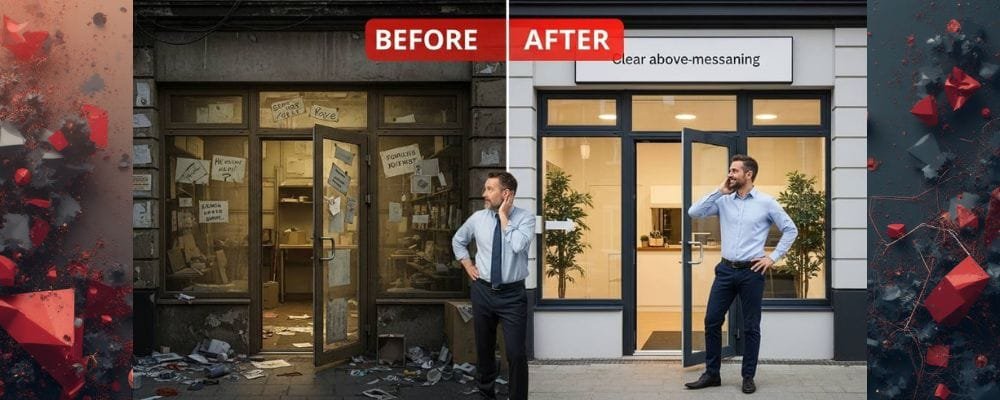
You’re not alone if you’ve been thinking, “I just need more traffic.”
That’s the most common conclusion people reach when they’re frustrated and stuck. You look at your website, you look at your leads, and you assume the math is simple: more visitors should equal more conversions.
But if you’ve been searching “why my website isn’t converting”, here’s the truth:
Your website can lose the customer before traffic even has a chance to help.
Because conversion doesn’t start when people scroll, explore pages, or compare pricing. Conversion starts in the first 3–10 seconds, when a visitor lands on your site and decides what they think about you.
Not based on logic.
Based on clarity.
Why my website isn’t converting… even when people visit?
A website doesn’t fail because it’s ugly.
It fails because it makes people hesitate.
And hesitation kills conversion.
Most visitors arrive with a simple mission: solve a problem quickly. They are not showing up ready to “explore.” They are showing up ready to judge.
They’re silently asking:
- Am I in the right place?
- Do they do what I need?
- Can I trust this business?
- What should I do next?
If your site doesn’t answer those questions immediately, visitors leave, even if your service is amazing.
That’s why you can get website visits and still feel like your business is invisible.
So if you’re asking why my website isn’t converting, the problem usually isn’t the traffic.
It’s what happens when traffic arrives.

The real mistake people make (and it’s not your fault)
Most websites are written like business brochures.
They’re built from the inside out.
Meaning: you describe your business using words that make sense to you, because you live in your industry.
So the homepage starts with things like:
- “Welcome to…”
- “We’re passionate about…”
- “High quality service you can trust…”
- “Innovative solutions for modern needs…”
None of those phrases are evil. They’re just not useful in the moment where conversion decisions are made.
Because visitors don’t want your passion statement first.
They want clarity first.
If your first screen doesn’t make things obvious, the customer doesn’t “read more.”
They leave.
And then you sit there wondering: why my website isn’t converting even though my business is good?
What happens when this continues (the hidden damage)
This kind of conversion problem has consequences that go beyond the website.
1) You waste marketing money
Ads can bring traffic. SEO can bring traffic. Social can bring traffic.
But if your homepage is unclear, every marketing effort becomes a leak.
You’ll spend more, post more, try harder… and still feel stuck.
2) You start attracting the wrong leads
When messaging is vague, you get random inquiries from people who aren’t a fit.
That creates frustration because it feels like “leads don’t work” when really your website is inviting confusion.
3) Customers compare you only on price
When the value isn’t clear fast, people assume you’re just like everyone else.
And when businesses look the same, people choose the cheapest option.
4) Your confidence takes a hit
This is the worst part.
Because eventually you stop blaming the website and start blaming yourself.
You start thinking your business isn’t attractive enough or your offer isn’t strong enough, when in reality your message just isn’t landing.
The real answer to “why my website isn’t converting”
Here’s the clean, practical answer:
Your website isn’t converting because it’s not making the visitor feel certain quickly enough.
Conversion is a certainty game.
The quicker someone understands what you do, who it’s for, and what they should do next, the more likely they are to take action.
That’s it.
So instead of chasing more traffic, the smartest move is to fix what happens before the scroll.
Your website has one job in the first section:
Make the decision easy.
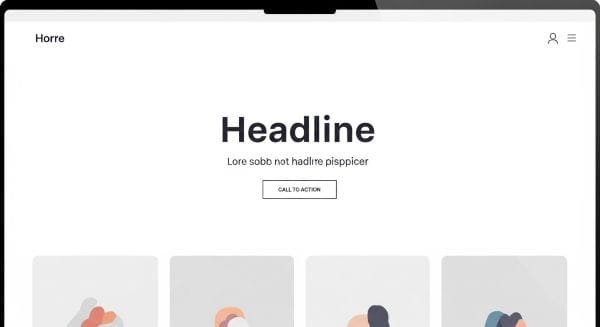
The Above-the-Fold Conversion Fix (simple framework)
Let’s rebuild your website’s first impression using steps that work for any business type.
Step 1: Replace your headline with plain-English clarity
Your headline should answer:
What do you do?
Not a slogan. Not a tagline.
A clear statement.
Examples:
- “Wheelchair-accessible medical rides in Tacoma with on-time pickup.”
- “Web design for local businesses that need more calls and bookings.”
- “Tax filing and bookkeeping for small business owners.”
If a stranger can’t repeat your service after five seconds, your headline is the reason why your website isn’t converting.
Step 2: Add “who it’s for” directly underneath
People don’t buy from websites.
People buy from websites that feel meant for them.
So your second line should answer:
Who is this for?
Examples:
- “For seniors, families, and caregivers who can’t risk missed rides.”
- “For contractors, clinics, salons, and local service providers.”
- “For business owners who want stress-free finances.”
This one line can dramatically increase conversion because it creates belonging.
Step 3: Use one primary call-to-action (one)
Too many buttons create confusion.
Pick one primary action:
- Call now
- Request a quote
- Book an appointment
- Schedule a consult
Make the button obvious.
Then reduce anxiety by adding a reassurance line under it, like:
- “No obligation.”
- “Quick response.”
- “Availability confirmation within 1 hour.”
When people feel safe, they click.
When people feel uncertain, they bounce.
Step 4: Add proof on the first screen (don’t hide it)
If trust isn’t built early, conversion won’t happen.
Add one proof element above the fold:
- “4.9 Google rating”
- “Serving Tacoma since 2017”
- One short testimonial line (real and specific)
- “Licensed + insured”
This works because it answers another key visitor question:
Is this business real and reliable?
Proof reduces hesitation.
Step 5: Make it easy to scan
Your top section should not look like a wall of text.
Visitors scan like this:
Headline → subheadline → CTA → proof → image
So design for scanning:
- Short lines
- Big font for headline
- Clear spacing
- No clutter
- A visual that supports the service
Most conversion problems happen because people don’t feel clarity quickly. Your layout either supports clarity or fights it.
If your site is getting visits but still not converting, it’s usually because the homepage isn’t answering the visitor’s real question. I explained this deeper here: https://hypereffects.com/business/your-website-isnt-ignored-answering-wrong-question/
Quick self-test (you can do this in 60 seconds)
Go to your homepage.
Don’t scroll.
Now ask:
- Is it instantly obvious what I do?
- Is it instantly obvious who it’s for?
- Is it instantly obvious what to do next?
- Do I feel trust right away?
If the answer is “no” to even one question, that’s why your website isn’t converting.
Not because you need better SEO.
Not because ads don’t work.
Not because your business isn’t good.
Because your website is making visitors work too hard.
What happens when you fix this
Once the first impression is clear, everything improves:
- SEO traffic converts better
- Ads become cheaper and more profitable
- Referrals close faster
- You get fewer bad leads
- You start attracting people who are actually ready to buy
This is what most businesses miss.
They keep pushing more people toward a website that isn’t prepared to receive them.
A calm reminder
If you’ve been stressed and Googling “why my website isn’t converting”, take this as a positive sign.
It means your business is active enough to notice the gap.
And this is a solvable problem.
A converting website doesn’t need fancy animation, clever words, or complicated funnels.
It needs:
- clear messaging
- strong first impression
- visible trust
- simple next step
Fix the first screen, and the rest of your marketing finally starts working the way you expected.
That’s when conversion becomes consistent.