
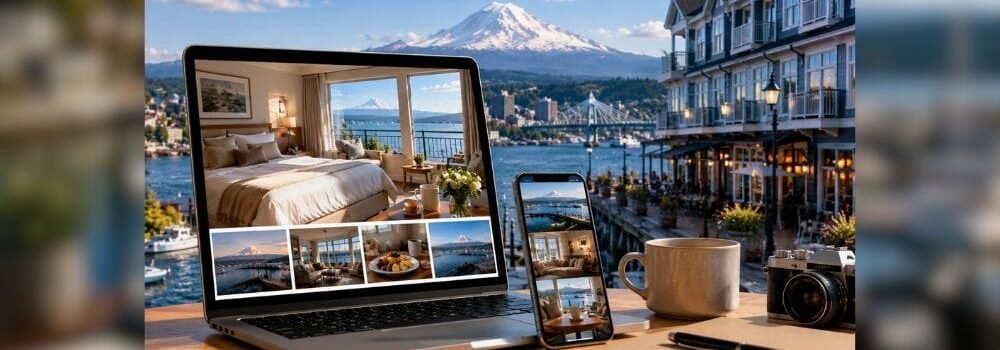
What most Tacoma hospitality business owners don’t realize: Your website isn’t just a digital brochure showcasing pretty rooms. Your website is your 24/7 booking engine, your frontline salesperson, and your competitive advantage against OTA platforms that actively work against your profit margins.
However, most hospitality websites in Tacoma compete directly against their own profitability by funneling guests toward Expedia, Booking.com, and Airbnb rather than capturing direct bookings where margins remain entirely yours.
The hospitality website challenge is unique and unforgiving. A prospect lands on your site at 9 PM, evaluates your property in 90 seconds, makes a booking decision in your favor or against you, and vanishes forever if conversion fails. There’s no second chance, no “come back later,” no nurture sequence. Either your website converts that booking directly, or that guest books through a platform that extracts 15-30% commission from your revenue.
This guide reveals exactly how Tacoma hospitality businesses should position their websites to capture direct bookings, reduce OTA dependency, and establish themselves as the preferred choice for waterfront and local tourism.
The Tacoma Waterfront Tourism Context
Tacoma’s Tourism Growth
Tacoma’s tourism landscape has transformed significantly over the past five years. According to Visit Tacoma, the destination continues to attract increasing numbers of leisure and business travelers, with the waterfront serving as the primary draw. Museums, restaurants, and waterfront attractions create a compelling reason for visitors to choose Tacoma over competing Pacific Northwest destinations.
The growth creates a unique opportunity and a specific challenge. Increasing visitor volume means more people searching “hotels in Tacoma,” “bed and breakfast Tacoma,” and “where to stay waterfront Tacoma.” However, most of that search traffic flows immediately toward booking platforms rather than to hotel websites, where direct booking margins could remain entirely with the property.
Your Competitive Reality
Expedia, Booking.com, and Airbnb dominate Tacoma hospitality search results. Your independent hotel or bed & breakfast website competes in that environment. The platforms have advantages: massive traffic, guest reviews, comparison capability, and frictionless booking. Your advantages are different: authentic property stories, direct pricing control, personal service messaging, and margin preservation.
Your website must leverage your advantages while directly addressing why someone should book with you instead of through a platform. This requires positioning that platforms cannot replicate.
The Hospitality Website Decision Psychology
The Tourist Evaluation Sequence
A prospective guest arrives on your website through a specific journey. Understanding this journey determines whether your website converts or fails.
Stage 1: Can I See What I’m Actually Getting? (0-15 seconds)
The first evaluation is visual. Professional photography of actual rooms, common areas, location features, and amenities is non-negotiable. Stock photography, outdated images, or poor visual representation eliminates your property from consideration before your text is read.
Guests want to envision their actual stay. They evaluate: Would this room meet my expectations? Does the property look well-maintained? Does the aesthetic match what I’m seeking? Visual clarity eliminates decision paralysis and builds confidence in booking.
Stage 2: What’s the Actual Experience Like? (15-45 seconds)
Beyond visual evaluation, guests need narrative clarity. They want to understand your property’s actual experience, not generic “luxury” or “cozy” descriptions. What happens when someone stays here? What makes this property distinctive compared to other options?
Strategic positioning addresses this through authentic storytelling. A waterfront hotel emphasizes the view experience. A historic B&B emphasizes its character and location story. An art-focused boutique property emphasizes its cultural positioning. Generic descriptions (“comfortable rooms, friendly staff, great location”) establish no meaningful differentiation.
Stage 3: Can I Trust This Property? (45-90 seconds)
Trust evaluation includes multiple elements: verified guest reviews with genuine-sounding detail, clear pricing without hidden fees, transparent policies, recognizable booking security indicators, and professional presentation. Red flags that destroy trust include testimonials that sound fake, pricing that requires clicking elsewhere to understand total cost, vague cancellation policies, and outdated website design.
Stage 4: Is the Booking Process Simple? (90+ seconds)
Once commitment forms, friction in the booking process kills conversions. Complicated reservation systems, unexpected payment requirements, unclear confirmation processes, and cumbersome payment options all create dropout moments.
Your website either removes thinking from the booking process or creates it.
Essential Hospitality Website Elements
1. Room Showcase Excellence
Your room photography and descriptions determine booking likelihood more than any other element. Professional photography of actual rooms (not stock images) is absolutely required. Guests need to see:
What to photograph professionally:
- Each room type from multiple angles
- Actual bed arrangements and size clarity
- Bathroom setup and features
- Window views and natural light
- Unique room characteristics
- Common areas and lobby
- Dining/breakfast areas
- Amenities and facilities
- Surrounding location features
Each room description should include:
- Square footage or dimensions
- Bed configurations and sizes
- Window and view characteristics
- Specific amenities in that room
- Technology features (WiFi, Smart TV, ports)
- Accessibility features if applicable
- Occupancy capacity
- Rate range or current pricing
- Unique features or advantages
Generic descriptions like “comfortable room with private bath” convey nothing. Specific descriptions like “180-square-foot oceanview room with king bed, rainfall shower, heated towel rack, Nespresso machine, and direct views of Commencement Bay” create clarity and justify pricing.
2. Direct Booking Incentive
Booking platforms extract revenue through commissions. Your website should directly incentivize booking with you rather than through a platform.
Effective incentive strategies:
- Direct booking rate: Guarantee lowest rate on your website (rate parity ensures no incentive to use platforms)
- Loyalty program: Additional night discount for repeat guests
- Amenity inclusion: Free breakfast, late checkout, room upgrade on website bookings
- Payment options: Flexible payment terms on direct bookings
- Cancellation flexibility: More generous policies on direct bookings
- Experience add-ons: Included activities or experiences for direct bookers
These incentives must be clearly visible and communicated on every rate quote to eliminate the decision friction between booking directly versus using a platform.
3. Booking Technology Integration
Your website’s booking system determines conversion more than almost any other factor. A complicated, cumbersome booking system creates dropout at the critical moment.
Essential booking system requirements:
- Real-time availability display
- Clear room type selection with pricing
- Simple date selection process
- Transparent total cost display (no hidden fees)
- Guest information form that’s simple but complete
- Multiple payment options (credit cards, PayPal, direct bank transfer)
- Confirmation email immediately upon booking
- Mobile-optimized booking flow (most bookings happen on phones)
- Multiple language options if targeting international guests
- Clear cancellation and modification policies displayed before confirmation
Testing shows that every form field, every page click, and every information requirement reduces conversion. Booking systems should collect exactly what’s necessary, no additional guest information required beyond the reservation itself.
4. Authentic Guest Reviews
Professional hospitality websites feature guest testimonials, but authenticity matters. Fake-sounding reviews damage credibility immediately. Real guest reviews that mention specific details (room features, location benefits, service interactions) establish genuine trust.
What authentic guest reviews communicate:
- Specific positive experiences (not generic praise)
- Actual guest names (first name + last initial)
- Review dates showing recency
- Review source transparency (Verified booking, Google, TripAdvisor)
- Star ratings visible alongside reviews
- Variety of room types mentioned in reviews
- Range of guest types (families, couples, business travelers)
Integrated review management ensures new reviews continuously appear on your website, signaling active guest satisfaction and recent booking activity.
5. Location and Experience Positioning
Tacoma’s waterfront tourism positions your property within a specific experience ecosystem. Your website should communicate your property’s relationship to that ecosystem.
Location positioning should communicate:
- Proximity to specific attractions (Point Defiance Zoo, Museum District, waterfront trails)
- Walking distance to restaurants and shopping
- Parking availability and cost
- Transit access for visitors without cars
- Neighborhood character and vibe
- Nearby activities and attractions
- Seasonal events and opportunities
For example: “Walking distance to the Museum District and Waterfront Park. Direct views of Commencement Bay and the Tacoma Narrows Bridge. Three miles from Point Defiance Zoo. Local restaurant district with 15+ options within two blocks.”
Specific positioning creates imagery and reduces decision paralysis. Guests can envision their actual experience, which drives booking confidence.
6. Transparent Pricing and Policies
Hospitality websites that hide pricing information or bury policies destroy trust. Clear transparency eliminates the decision friction that pushes guests toward booking platforms they already understand.
Pricing transparency includes:
- Room rate ranges or current rates displayed
- Breakdown of all fees (resort fee, parking, taxes if applicable)
- Clear indication of what’s included in the rate
- Seasonal rate variation explanation
- Rate guarantee clarity
- Payment terms and deposit requirements
- Cancellation policy clearly stated
- Refund policy without ambiguity
- Group booking policies if applicable
Policies requiring guests to click through to understand create friction. Clear, upfront information (even if policies are restrictive) builds trust through transparency.
7. Direct Contact Accessibility
Hospitality guests often need immediate answers before committing to a booking. Phone lines, email, chat, and contact forms all serve different guest preferences and urgency levels.
Accessibility best practices:
- Phone number prominently displayed (mobile-clickable)
- Business hours clearly stated
- Email response time expectation communicated
- Live chat for immediate questions (if staffing allows)
- Contact form that reaches real humans quickly
- Social media responsiveness
- Immediate response confirmation for all inquiries
Guests expect faster response times for hospitality inquiries than other business types. A response within 2 hours can mean the difference between booking with you or moving to your competitor.
Tacoma-Specific Hospitality Positioning
Waterfront Identity
Your website should leverage Tacoma’s identity as a waterfront destination. Even properties without waterfront location can position themselves relative to waterfront attractions.
Waterfront positioning language:
- View descriptions if applicable
- Waterfront access and recreation information
- Waterfront attraction proximity
- Bay views from property features
- Harbor-related activities and experiences
- Waterfront dining options
- Maritime history and character references
This positioning attracts guests specifically seeking waterfront tourism experiences.
Cultural Tourism Positioning
Tacoma’s cultural attractions (museums, galleries, arts events) draw a specific guest demographic. Your website should communicate accessibility to that demographic.
Cultural tourism positioning:
- Museum District proximity
- Gallery and arts venue information
- Cultural event calendars and information
- Connections to local artists or cultural organizations
- Artistic amenities or décor features
- Cultural activity recommendations
- Concierge service for cultural experience planning
This positioning attracts higher-value guests with specific cultural interests.
Business and Family Tourism
Tacoma attracts business travelers and families alongside leisure tourists. Your website should communicate relevance to all segments.
Business traveler positioning:
- High-speed internet
- Work desk/workspace in rooms
- Quiet environments
- Proximity to business districts
- Meeting space availability
- Extended stay options
- Practical amenities
Family positioning:
- Kid-friendly amenities
- Family room options
- Activity recommendations
- Safety features
- Breakfast options
- Nearby family attractions
- Flexibility with children
Common Hospitality Website Mistakes
Mistake 1: Beautiful Aesthetic Without Booking Conversion
Many hospitality websites prioritize visual beauty while neglecting booking conversion. A stunning website that doesn’t convert browsers into reservations is elegant failure.
Fix: Test booking flow thoroughly. Simplify to the absolute minimum information required. Place booking engine prominently on every page. Make your booking system mobile-perfect.
Mistake 2: Stock Photography Instead of Actual Property Photos
Stock photographs of generic hotel rooms provide no specificity. Guests want to see actual rooms, actual views, actual property conditions.
Fix: Invest in professional photography of your actual property. Replace every stock image. This is the single highest-ROI investment for hospitality websites.
Mistake 3: Pricing That Requires Clicking Elsewhere to Understand
Forcing guests to click through or contact you to see actual rates creates friction that pushes them toward platforms with transparent pricing.
Fix: Display rate ranges or current pricing on your website. Even if pricing is complex, show guests the baseline so they understand cost immediately.
Mistake 4: Fake-Sounding Guest Reviews
Guest testimonials that read like marketing copy destroy credibility instantly. Guests immediately recognize fabricated praise.
Fix: Feature actual guest reviews with genuine detail, names, and specificity. Real reviews convince far more effectively than any marketing copy.
Mistake 5: Unclear Booking or Cancellation Policies
Guests need clarity on what they’re committing to. Vague or hidden cancellation policies create decision hesitation that pushes toward platforms with transparent policies.
Fix: State all policies clearly upfront. Even strict policies build trust through transparency.
Mistake 6: Outdated Website Design
Outdated design communicates outdated property and poor management. First impressions are trust impressions.
Fix: Professional, modern design that reflects your property quality. This includes mobile optimization as the priority, not an afterthought.
Mistake 7: Slow Website Performance
Slow websites create friction and abandonment, particularly on mobile devices where most bookings happen. As per Google’s hospitality insights, page speed directly correlates with booking completion rates.
Fix: Website speed testing and optimization. Compress images. Minimize plugins. Use content delivery networks. Test on multiple devices and connections.
FAQ: Tacoma Hospitality Website Questions
Q: Should I use Airbnb if I have a bed & breakfast?
A: Airbnb is valuable for reach and discovery, but your website should be your primary conversion channel. You control pricing, direct communication, and margins entirely on your website. Use platforms for traffic generation, but funnel guests toward your website for booking whenever possible.
Q: How often should I update room photography?
A: Every 12-18 months minimum, or whenever you renovate. Outdated photography signals that the property hasn’t been maintained. Regular photo updates communicate active management and current property conditions.
Q: What booking system is best for small hotels or B&Bs?
A: Systems like Bookings.com’s direct booking tools, Channel Manager platforms (like Cloudbeds or Little Hotelier), or WordPress plugins (like Booking Calendar) serve small hospitality well. Choose one integrated with your website and synchronized with all booking channels to prevent overbooking.
Q: How do I compete with OTA platforms if they have more traffic?
A: You compete by offering value that platforms can’t: direct booking discounts, loyalty programs, personalized service, and rate guarantees. Your website communicates why booking directly is better. Use platforms for discovery, but position your website as the preferred booking channel.
Q: Should I require a deposit at booking or offer flexibility?
A: This depends on your market and cancellation history. Flexible cancellation policies convert more bookings but increase no-show risk. Strict policies convert fewer bookings but reduce financial risk. Consider middle-ground approaches: standard cancellation with flexible upgrades for direct bookings, or flexible policies with moderate deposit requirements.
Q: How do I get more guest reviews?
A: Request reviews actively after checkout via email. Simplify the review process by providing direct links to review platforms. Respond to all reviews (positive and negative) to show you’re engaged. As per TripAdvisor hospitality research, properties that actively manage reviews and respond promptly see significantly higher review generation and booking rates.
Tacoma Hospitality Website Implementation Strategy
Phase 1: Foundation and Positioning (Weeks 1-2)
- Define your specific positioning (waterfront, cultural, business, family, or combination)
- Conduct professional property photography
- Clarify rates, fees, and policies
- Gather authentic guest reviews and testimonials
- Plan booking technology integration
Phase 2: Website Development (Weeks 3-6)
- Design website reflecting property aesthetic and positioning
- Implement booking system with transparent pricing
- Integrate verified guest reviews
- Optimize mobile experience completely
- Ensure fast page load times across devices
Phase 3: Direct Booking Optimization (Weeks 7-8)
- Create direct booking incentives
- Test booking flow thoroughly
- Implement analytics tracking
- Set up automated guest communication
- Plan review request system
Phase 4: Launch and Promotion (Weeks 9-10)
- Launch website and booking system
- Promote direct booking across channels
- Monitor conversion rates
- Optimize based on user behavior data
- Establish ongoing review management
What Direct Booking-Focused Website Strategy Enables
When Tacoma hospitality businesses invest in direct-booking-focused websites:
Margin Improvement: Eliminating 15-30% OTA commissions on direct bookings means immediately higher profitability. A 20-room hotel capturing just 5 direct bookings monthly instead of through platforms creates $2,000-3,000 in additional monthly revenue (depending on nightly rates).
Price Control: Direct bookings allow rate flexibility without platform constraints. You control pricing, discounting, and package offerings entirely.
Guest Data: Direct bookings provide first-party guest data you own, enabling loyalty programs, repeat marketing, and relationship building platforms cannot facilitate.
Service Differentiation: Your website communicates personalized service, local knowledge, and experience positioning that commodity platforms cannot replicate.
Competitive Advantage: While competitors funnel guests through platforms, your direct-booking website captures bookings at better margins and builds direct guest relationships.
Related Hyper Effects Hospitality Resources
Understanding how your website functions as a revenue-generating system requires understanding the broader web strategy framework. These resources provide context for hospitality-specific website positioning:
- Website Analytics for Tacoma Business Owners: What Actually Matters — Understanding which metrics predict booking conversion
- Tacoma Web Design for Service Businesses: Generate Qualified Leads — Lead generation systems applicable to booking conversion
- How Tacoma Customers Make Decisions: Local Psychology — Tourist decision psychology specific to Tacoma market
- Local SEO Checklist for Tacoma Businesses: Complete Implementation Guide — Ranking your hospitality property for Tacoma tourism searches
- Cost of NOT Having Professional Website: Tacoma Businesses — Quantified revenue loss from hospitality websites that don’t convert
- Website Design for Small Businesses in Gig Harbor — Small property positioning strategies applicable to B&Bs
- How to Build Trust on a Local Business Website That Actually Converts — Trust-building techniques for guest confidence
Taking Action: Your Tacoma Hospitality Website Strategy
Your website is your most powerful revenue-generating tool if positioned correctly, or your most expensive failure if positioned incorrectly. The difference isn’t beautiful design—it’s booking conversion.
Schedule a free hospitality website strategy consultation with Hyper Effects to evaluate whether your website is actually converting browsers into direct bookings, identify specific conversion barriers, and develop a clear roadmap for capturing direct bookings at Tacoma waterfront tourism growth rates.
This consultation determines whether you’re currently leaving significant reservation revenue on the table by not optimizing for direct booking conversion.