
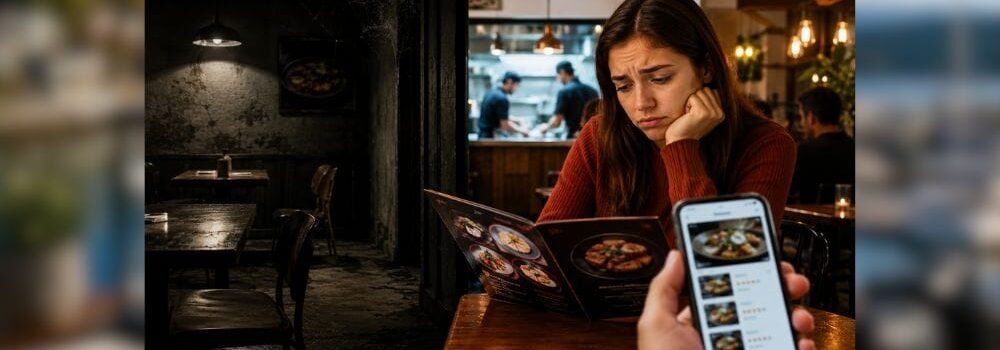
When Your Restaurant Menu Quietly Loses Customers Before They Ever Call
Most restaurant and cafe websites in Olympia operate under a single assumption: if people can see the menu, they will decide to come in. This assumption quietly fails. A menu displayed on a website does not drive reservations, does not fill seats, and does not convert Capitol worker lunch traffic into repeat business. The problem is not that your menu exists. The problem is that your menu page works in complete isolation from the actual decision-making behavior of the people who visit your site. Capitol workers in Olympia are not casually browsing for dining options. They are searching during a specific window, making a fast decision about where to eat, and looking for clarity on two things: whether the restaurant matches their schedule and whether it feels like an appropriate professional choice during a workday. When a website menu page fails to address those concerns, the visitor moves on.
The damage compounds because it happens silently. You do not receive a phone call explaining why someone did not choose your restaurant. Google Analytics simply shows that someone visited the menu page and left without taking action. That invisible departure costs you repeat customers, steady lunch traffic from the Capitol campus, and the revenue that comes from building authority within Olympia’s government employee community. In a market where state government represents 23 percent of all employment, losing Capitol worker traffic is losing one quarter of your most predictable customer base.
Your Menu Page Is Built for Browsers, Not for Decision Makers
Restaurant menus on most Olympia business websites follow a predictable pattern: a PDF download, a gallery of food images, or a text list buried beneath several clicks. Each of these approaches makes the same fundamental error. They present information as if the visitor has already decided to choose your restaurant and simply wants to review what you offer. In reality, the menu page is where the decision is made. A Capitol worker with 45 minutes between meetings is comparing your restaurant against three competitors simultaneously. Your menu page must answer questions that a printed menu in a dining room does not need to answer because in a dining room, the person is already sitting down.
Capitol workers ask these questions silently while scanning your menu page: Does this restaurant serve food I can eat in professional clothing without needing to change? Does the menu indicate this is a place where government employees actually eat? Can I order quickly enough to return to work on time? Is this restaurant aware that my lunch break is scheduled and has a hard end time? If your menu page does not address these concerns, it does not answer the actual question the visitor is asking. The decision happens in that gap between the question being asked and the answer being provided. That is where customers disappear.
The secondary problem is conversion architecture. Most restaurant websites treat the menu as a destination. A visitor arrives at the menu page and then must figure out what to do next: find a phone number, locate a reservation link, or hunt for business hours. This fragmentation adds friction at the moment when the decision to visit has just been made. Instead of a clear path from decision to action, the visitor encounters uncertainty about how to proceed. That uncertainty kills conversion. Each step added between “I want to eat here” and “I have made a reservation or placed an order” reduces the likelihood that the action will happen.
The Solution: Build Your Menu Page as a Decision Support System, Not a Display
A high-converting restaurant menu page in Olympia serves a different purpose than a traditional printed menu. It removes thinking, provides clarity about timing, and guides the visitor through a frictionless path toward reservation or ordering. The menu page must accomplish three simultaneous goals: demonstrate that your restaurant understands Capitol worker scheduling, establish professional credibility within Olympia’s government community, and convert the visitor’s decision into an immediate action without additional friction.
Start with audience segmentation. A Capitol worker visiting during the workday has different needs than a leisure diner planning a weekend dinner. Your menu page should immediately signal which audience you are addressing. This can happen through clear labeling of business lunch offerings, prominent display of lunch-hour specials, and visible communication of average service time. When a Capitol worker sees “Average lunch service: 35 minutes” alongside the lunch menu, they are receiving the information that matters to their decision. Professional clarity builds trust faster than any other signal.
Structure the menu for speed, not browsing. Olympia restaurants should organize menu sections by the actual use cases that different Capitol worker segments have. A quick weekday lunch section should be visually distinct and positioned at the top of the page. Items should include estimated service times and pricing that reflects the value proposition to a professional with limited time. For cafes, a morning menu should reflect what Capitol workers actually order before 9 AM: coffee, breakfast items prepared quickly, and pastries that can be eaten at the desk or consumed during the commute. The menu organization should match the visitor’s decision path, not the kitchen’s operational categories.
Add trust signals specific to Olympia’s government community. Capitol workers respond to signals that indicate your restaurant is part of the professional ecosystem they inhabit. This can include mentions of catering services for government meetings, regular features of local government officials in your dining room, or explicit communication about your restaurant’s role in Olympia’s business community. As per Hyper Effects’ research on Olympia audience expectations, government employees in the capital city expect businesses to acknowledge and respect the community values of sustainability, professional credibility, and local commitment. Your menu page should subtly reinforce these values through language and design choices. If your restaurant sources local ingredients, that should be visible on the menu. If you have sustainability practices, they should be mentioned. If you participate in Olympia’s business community, that should be evident.
Convert the menu page into an action sequence. The moment a visitor finishes reviewing your menu, the next action should require zero additional searching. Reservation links, ordering buttons, or phone numbers should appear in multiple places on the menu page itself. For restaurants targeting Capitol workers, a prominent reservation system that allows same-day booking is essential. For cafes, a mobile ordering option removes friction and appeals to the professional who wants their coffee ready when they arrive. The goal is that the menu page conclusion is an immediate action, not the visitor returning to search for contact information.
Sustainability as a market differentiator. Olympia values sustainability and environmental responsibility as core community values. Your restaurant menu can lean into this through transparent communication about waste reduction, composting, or local sourcing. When Capitol workers see your restaurant as aligned with Olympia’s values, they develop stronger loyalty. This is not about making environmental claims without substance. It is about demonstrating through specific menu and operational choices that your restaurant takes sustainability seriously. Language such as “All our coffee is sourced from Washington-based roasters” or “We compost all food waste” connects your restaurant to Olympia’s identity.
Community and local positioning. Olympia residents, particularly government employees, have high loyalty to local businesses. Your menu page should communicate that your restaurant is part of the Olympia community, not a franchise or chain. Highlighting local suppliers, featuring staff names, or explaining your restaurant’s history in Olympia builds connection. Capitol workers are making a choice between many dining options. A restaurant that clearly signals its commitment to Olympia’s community gets chosen repeatedly by professionals who value local loyalty.
Implementation: Three Specific Changes That Drive Menu Conversion
One: Create a Capitol Worker-Specific Menu Section. Rather than displaying a single general menu, create a visually distinct section labeled “Lunch in 45 Minutes” or “Quick Capitol Lunch.” This section should feature items that can be ordered and prepared within reasonable timeframes, priced to provide value to professionals, and designed to be eaten quickly without mess or complication. This sends a signal to Capitol workers that you understand and respect their time constraints.
Two: Add Visible Reservation or Ordering Calls to Action. After every three to five menu items, include a button or link that allows the visitor to make a reservation or place an order. Do not assume the visitor will scroll to the bottom of the page to find contact information. Place action buttons strategically throughout the menu so that conversion can happen at the moment when the decision has been made.
Three: Include Service Time Expectations and Real Operating Information. Display your actual hours clearly, particularly lunch hours. Indicate average service times for lunch orders. If you offer delivery or mobile ordering, make that visible. If you have private dining or meeting spaces useful for government workers, feature them. Capitol workers need to know operational details to make fast decisions. When your menu page provides this information proactively, it reduces the friction between decision and action.
Why This Matters: The Revenue Impact of Menu Conversion
Restaurants and cafes in Olympia operate in a market where 23 percent of customers work within government. These are professionals with predictable schedules, high loyalty to businesses they trust, and the ability to generate repeat revenue through consistent lunch visits. A restaurant that captures Capitol worker traffic during lunch creates a stable revenue base. A single Capitol worker who visits weekly for lunch represents 50+ visits annually. If your restaurant serves ten Capitol workers each week, that represents 500 visits annually from a single audience segment. The menu page is where this audience either decides that your restaurant is part of their routine or decides that a competitor is a better fit.
The cost of a menu page that fails to convert is not the cost of building a better website. It is the cost of losing 50+ visits from each Capitol worker who visits your site and leaves without converting. Over a year, the difference between a menu page that converts and a menu page that informs is substantial revenue. As per the philosophy that guides high-converting websites, a website should remove thinking and guide visitors toward action before doubt has a chance to appear. Your menu page is the moment of decision. If it does not complete the conversion, it is costing you customers.
Latest Published Restaurant Website Resources
For additional guidance on building conversion-focused restaurant websites, see our recent article on How Tacoma Restaurants Can Bring in More Winter Customers, which covers seasonal strategies applicable to Olympia’s climate and visitor patterns. For comprehensive guidance on building local authority in the Olympia market, review the Complete Olympia Web Design Guide for Local Business Owners, which details audience expectations and trust-building strategies specific to Olympia’s government-centered economy.
Frequently Asked Questions: Google Overview-Friendly Answers
Q: Why do Capitol workers in Olympia leave restaurant websites without converting? Capitol workers search for specific information: menu availability, service time, and professional atmosphere. Restaurant websites often display menus without context for scheduling or decision-making. When this critical information is missing, visitors leave to compare competitors who provide clarity about timing and professionalism.
Q: How should restaurant menus be structured for government employee audiences? Structure menus by actual use case first: lunch specials, quick service items, and timing information should appear before standard menu sections. Capitol workers need to know service duration, pricing value, and whether items can be eaten in professional clothing. Organization should match decision-making sequence, not kitchen operations.
Q: What trust signals make Olympia restaurants attractive to Capitol worker diners? Capitol workers respond to signals indicating local commitment, sustainability practices, and understanding of their time constraints. Mentioning local sourcing, sustainable practices, participation in Olympia’s business community, and specific lunch-hour service capabilities builds trust and repeat visits from government employees.
Q: How does conversion architecture differ between restaurant websites and cafe websites? Restaurants should emphasize reservation systems and dining experience. Cafes should prioritize mobile ordering and quick-pickup options. Both should eliminate steps between menu review and action, placing reservation/ordering buttons throughout the page rather than at the end to capture conversion at the decision moment.
Q: How can Olympia restaurants differentiate themselves through sustainability messaging? Communicate specific, verifiable sustainability practices on the menu page: local sourcing, waste reduction, composting programs, or energy-efficient operations. Avoid generic claims. Capitol workers in Olympia value environmental responsibility as core community value; concrete sustainability details build loyalty and justify premium positioning.
Related Hyper Effects Services:
Learn more about building conversion-focused websites with our Olympia Web Design Service or explore SEO strategies for restaurants at Olympia SEO Service. For comprehensive digital strategy, visit Olympia Marketing Services.
For local business authority and trust-building, read our guide on What Olympia Customers Really Expect When They Visit Your Website.