
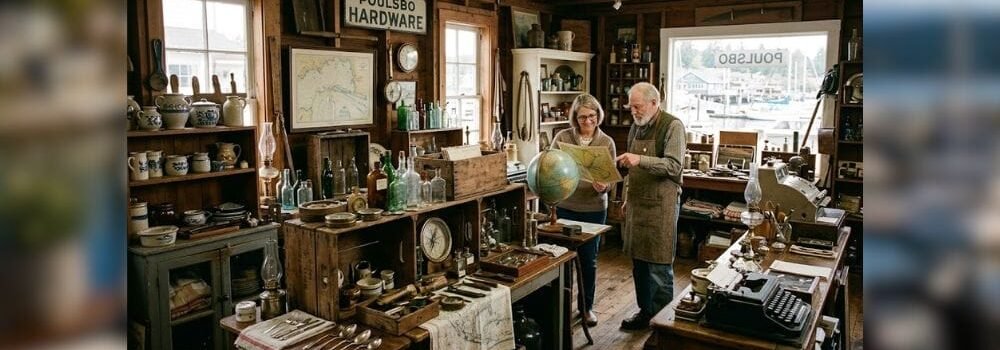
The Silent Problem Poulsbo Antique Dealers Face: Collectors Are Searching Online, But Your Website Isn’t Found
Antique shops in Poulsbo draw collectors from across the country. The waterfront heritage, Scandinavian charm, and established vintage community create a destination for serious buyers searching for rare finds. Online, however, most Poulsbo antique stores remain invisible.
Here is what actually happens: A collector in Seattle searches “antique Poulsbo” or “rare vintage collectibles Pacific Northwest.” Your shop does not appear. The collector browses competitors’ websites instead. Your physical store might have exactly what they seek, but they never discover it because your web presence communicates nothing about your curated inventory.
This is not a failure of your business. Most antique dealers build their reputation through foot traffic, local referrals, and weekend tourists. The assumption holds that collectors will visit in person once they are in the area. This assumption, however, costs you thousands of dollars in lost sales annually.
The reality is this: Collectors research extensively before traveling. They search inventory online, compare pricing, verify authenticity documentation, and evaluate shipping options. A collector planning a trip to Poulsbo visits five antique shop websites before selecting destinations. If your website does not exist or communicates nothing about your inventory, you are eliminated from consideration before anyone walks through your door.
Why Antique Collectors Have Different Buying Psychology Than Retail Customers
Antique collectors are not casual browsers. They operate with specific criteria, defined budgets, and deep product knowledge. This means your website messaging must shift entirely from retail-focused (“Come visit us!”) to collector-focused (“Here is what we have, authenticated and priced fairly”).
Poulsbo’s collector market includes several distinct buyer types. Serious collectors invest thousands pursuing specific categories (furniture periods, pottery marks, historical artifacts). Weekend buyers hunt for unique home décor and conversation pieces. Estate liquidators source inventory for resale. International buyers ship pieces worldwide.
Each of these audiences requires different website signals. A serious furniture collector needs condition ratings, period authentication, and provenance documentation. A casual decorator needs high-quality photos and shipping clarity. An estate liquidator needs bulk pricing and rapid acquisition process.
When your website tries to speak to all audiences equally, it speaks clearly to none. Decision paralysis sets in. The collector lands on your site, sees generic descriptions without authentication details, finds no clear pricing, and leaves within seconds. You have not made a decision easier. You have created confusion instead.
The Real Cost: Your Inventory Remains Invisible While Competitors Capture Sales
Consider the numbers. A single antique sale averages $300 to $1,500 depending on category. A collector visiting Poulsbo might purchase 2-3 items, generating $1,000 to $4,000 in revenue. That collector came from an online search where your website did not compete.
If your website attracts just one serious collector per month who would not have visited otherwise, you generate an additional $3,600 to $48,000 annually. Most antique dealers report their online sales represent 15-25% of total revenue, meaning your website generates income 24/7 without staff overhead.
Your current situation: Website generating zero income from online discovery. Competitors’ websites capturing sales. Your foot traffic remaining flat across seasons because you do not appear in searches.
The financial model is straightforward. A properly positioned antique shop website pays for itself through a single collector acquisition per month. It operates as a 24/7 automated sales engine, capturing interest when collectors search, converting research into purchases, and handling international shipping logistics without daily management.
How Antique Collectors Actually Search: Understanding Poulsbo’s Discovery Path
Collectors searching online use specific patterns. They begin with geographic searches (“antique shops Poulsbo”) or category searches (“vintage Quimper pottery” or “mid-century walnut furniture”). They expect websites to provide what a physical visit would reveal: inventory visibility, authentication details, pricing, and condition information.
Your website must answer these immediate questions before a collector reaches out:
What do you actually have? Generic descriptions like “Great antique furniture collection” communicate nothing. A collector needs specifics: “Danish Modern walnut credenza, circa 1960s, restored finish, dovetail joinery, $2,400.” This level of detail signals expertise and seriousness.
How do I know it is authentic? Collectors verify through research. Your website must provide authentication details: period markers, maker marks, construction techniques, historical context. A piece identified as “Arts and Crafts era oak table” means nothing without documentation of construction methods, wood selection, and design period indicators proving authenticity.
What is the condition? Professional antique dealers rate condition systematically: Excellent (like new), Very Good (minor wear), Good (apparent use), Fair (significant wear), Poor (major restoration needed). Your website must display this rating, explain what it means, and show detailed photos of wear points, repairs, or restoration work.
What is the price? Collectors hate surprises. Transparent pricing builds trust. Even items “sold” serve a purpose: they prove you move inventory and command fair prices. Vague “call for pricing” suggests you are hiding costs or uncertain of value.
Can I actually buy it? Your website must show acquisition process. International shipping? Packaging standards for fragile pieces? Return policy for remotely purchased items? Payment methods accepted? Timeline from order to delivery?
When your website answers these questions with clarity and detail, collectors move forward. When it creates ambiguity, they exit.
The Solution: A Website Built for Collector Psychology, Not Generic Retail
An antique shop website must function as a curated showroom, not a digital business card. This requires specific structure and content approach.
Inventory Display with Professional Product Photography
Each item requires multiple high-quality photographs showing full view, detail shots, maker marks, damage or repairs, and scale context. A collector needs to see exactly what they are purchasing without guesswork.
Your website gallery should organize by category (furniture, pottery, glassware, jewelry, textiles) with filter options. Advanced collectors appreciate sorting by era, price range, or material. This removes friction from the discovery process.
Detailed Product Descriptions with Authentication Context
Every piece needs a description that includes period, maker/manufacturer if known, materials, dimensions, condition rating, restoration history (if any), and pricing. The tone should match collector expectations: knowledgeable, precise, and honest about condition.
For example, instead of “Beautiful vintage bowl,” write: “Quimper earthenware bowl, Henriot Quimper mark, circa 1930s, hand-painted French peasant scene, 9-inch diameter, excellent condition with no chips or crazing, $350.” This description shows expertise, provides authentication, sets pricing, and signals quality.
Condition Reporting with Transparent Honesty
Serious collectors expect detailed condition information. Instead of hiding restoration work or damage, document it clearly. “Walnut secretary desk, circa 1880, original hardware, one-inch crack in left side panel (professionally repaired and stable), finish refinished 1995, otherwise excellent structural condition, $1,800.”
Transparency builds trust. Collectors understand antique pieces carry history and wear. They appreciate honesty more than perfection claims.
Provenance and Authentication Documentation
When items have documented history, display it prominently. Previous owner information, auction results, expert appraisals, or publication features all establish authenticity and value. This information differentiates your shop from competitors and justifies pricing.
Collector-Friendly Purchasing Process
Your website must streamline acquisition for remote buyers. Clear shipping costs for fragile items (antique glass and ceramics require professional packing). International shipping options with customs guidance. Payment methods including wire transfer for larger purchases. Return or inspection period for remote buyers building confidence.
Why Poulsbo’s Antique Market Specifically Benefits From This Approach
Poulsbo attracts collectors nationwide for specific reasons: Scandinavian heritage items, quality vintage furniture from the 1950s-1970s, established dealer reputation, waterfront tourism traffic. Your website should emphasize these advantages.
A collector from California researching Scandinavian modern furniture discovers your Poulsbo shop through search. Your website showcases inventory with period authentication and pricing. The collector visits Poulsbo intentionally to view pieces in person before acquiring. You have converted online discovery into foot traffic and sales.
Your website operates as a 24/7 discovery engine, capturing collectors when they search online. You are not chasing customers. You are being present when they come looking.
Building Authority Through Collector-Focused Content
Beyond product listings, your website should establish expertise through educational content. Blog posts addressing collector interests, identifying period markers, understanding maker marks, evaluating condition and value, position you as a knowledgeable dealer, not just a shop operator.
Reference related Poulsbo retail strategies from your main marketing hub showing how local authority builds customer trust. Connect to your retail shop design article (within Poulsbo business portfolio) demonstrating how specialty shops capture higher-value customers through thoughtful positioning.
Content like “How to Identify Arts and Crafts Era Oak Furniture” or “Quimper Pottery: Maker Marks and Dating Guide” attracts collectors searching for expertise. These posts position your shop as an authority source, driving traffic and establishing credibility before visitors see your inventory.
The Difference Between a Silent Website and a Collecting Platform
Most Poulsbo antique shops operate silent websites. A few photos, vague descriptions, a phone number. Collectors searching online pass by because the site communicates nothing about inventory.
Your website should communicate this: “We maintain a rotating collection of authenticated antique furniture, pottery, textiles, and decorative arts. Every piece includes detailed condition reporting, authentication documentation, and transparent pricing. We ship internationally to collectors worldwide. Browse our current inventory below or contact us with specific collection interests.”
This statement establishes authority, sets expectations, and invites engagement. The website becomes a sales system, not a digital brochure.
Measuring Success: What Matters Beyond Traffic
A silent website generates traffic from casual searches. A collector-focused website generates traffic from serious buyers. The difference shows in conversion rate: percentage of visitors who contact you or purchase.
A retail site converting 0.5% of visitors might see 100 visits generate one inquiry. A collector-focused site converting 3-5% sees the same traffic generate 3-5 serious inquiries. The difference is messaging clarity and audience alignment.
Track your results: How many inquiries arrive from Google searches for “[your shop name]” versus “antique [category] Poulsbo”? How many remote sales close through your website versus foot traffic? These metrics reveal whether your website serves collectors or just sits quietly collecting digital dust.
FAQs
Q: How do antique dealers authenticate items for resale? A: Authentication combines period research, maker mark verification, construction method analysis, and historical documentation. Professional dealers document findings transparently, establishing item authenticity and justifying pricing to collectors.
Q: What condition ratings mean in antique sales and pricing? A: Condition ratings (Excellent, Very Good, Good, Fair, Poor) standardize quality assessment. Transparent ratings build buyer confidence. Excellent pieces command premium prices; damaged items offer value for restoration projects or budget collectors.
Q: Why do antique shops charge different prices for similar items? A: Pricing reflects condition, rarity, provenance, authentication difficulty, and market demand. Reputable dealers research comparable sales and adjust for uniqueness. Transparent pricing explanation builds trust with serious collectors.
Q: Can antique buyers purchase remotely or must they visit in person? A: Quality dealers support remote purchases through detailed photography, condition reporting, secure payment, and professional shipping for fragile items. Written authentication documentation protects remote buyers building confidence in acquisition decisions.
Q: How should antique shops communicate with collectors searching online? A: Use professional product descriptions with authentication details, period information, materials, dimensions, condition ratings, and pricing. Detailed inventory display with search filters attracts serious collectors while signaling expertise and seriousness.
Conclusion:
An antique shop website is not about appearing busy or impressive. It is about demonstrating expertise, transparency, and respect for collector psychology. When your website removes decision paralysis, establishes authentication authority, and facilitates easy acquisition, it becomes a 24/7 sales system capturing collectors you would never reach through foot traffic alone.
Poulsbo attracts collectors nationwide. Your website should capture that national audience, converting research into sales, and positioning your shop as an authority dealer in the collectors’ community.
The question is not whether a collector website matters. Competitors’ websites are already capturing your potential sales. The question is whether you will build a platform matching collector expectations or remain invisible while others convert searches into revenue.
Your website can do this. It just needs to be built for collector psychology, not generic retail assumptions.