

Trust Signals a Gig Harbor Website Must Have in 2026 (And Why They Matter More Than Ever)
You’ve invested in a website. It looks professional. It loads quickly. You’re proud of it. But if you’re honest, the phone isn’t ringing as often as it should, and you’re not sure why.
Here’s what most Gig Harbor business owners don’t realize: having a good-looking website and having a trustworthy website are not the same thing.
Trust is built from a specific set of signals, some visible, some technical, some behavioral, that tell both your visitors and search engines whether your business is worth recommending. Remove any one of them, and something feels subtly off. Remove several, and visitors leave without ever being able to explain why.
In 2026, those signals matter more than they ever have. Not just because Gig Harbor buyers are experienced and discerning, and they are, but because AI tools like Google’s AI Overviews are now reading your website the same way a cautious buyer does. They’re looking for evidence before they recommend you to anyone.
That’s the part most local businesses haven’t caught up to yet.
Below are the eight trust signals your Gig Harbor website must have in place, what each one is, why it matters to the people visiting your site, and why it’s now being evaluated by the technology deciding which local businesses get surfaced in search results.
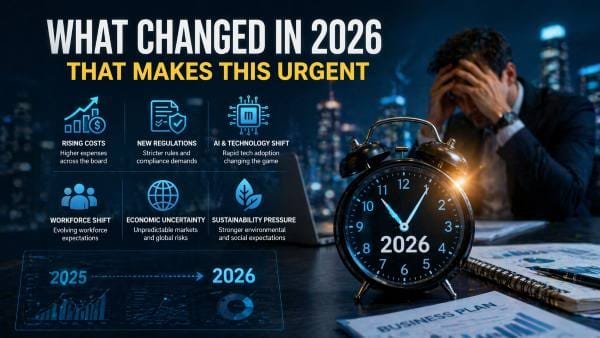
What Changed in 2026 That Makes This Urgent
A few years ago, trust signals were primarily about human psychology. You added reviews to your website, made sure your phone number was visible, and called it done.
That’s still necessary. But it’s no longer sufficient.
Google’s AI Overviews, the AI-generated answer boxes that appear at the top of search results, now appear on nearly half of all searches and reach more than two billion users every month. When someone in Gig Harbor searches “best website designer near me” or “who does web design in Gig Harbor,” an AI system synthesizes an answer and cites sources it considers trustworthy. The businesses it cites get visibility. The businesses it doesn’t cite largely disappear from consideration, even if they rank well in traditional search.
Here’s the uncomfortable part: the signals AI systems use to decide which businesses are trustworthy enough to recommend are almost identical to the signals your human visitors use. A website that feels credible to a Gig Harbor buyer also looks credible to an AI search tool. A website that feels uncertain or incomplete to a buyer also gets skipped by AI.
This means fixing your trust signals isn’t just about improving how your site feels to visitors. It’s about being findable and recommendable in the way local search is actually working right now.
With that context in place, here are the eight signals that matter most.
Signal 1, A Verified, Active Google Business Profile
Before a potential Gig Harbor client ever sees your website, they almost certainly see your Google Business Profile. It appears in map searches, in local results, and increasingly in AI-generated answers about local businesses.
A complete, active profile, with accurate hours, a current business description, recent photos, and a verified address, is the first trust signal the entire digital ecosystem builds from. When the information on your Google Business Profile matches your website exactly, it tells both visitors and AI tools that your business is real, documented, and paying attention.
When it doesn’t match, when the phone number is different, the hours are outdated, or the service description uses different language than your website, it creates a quiet inconsistency that erodes confidence in both directions.
The Gig Harbor market is small enough that reputation travels. Your Google Business Profile is often the first chapter of that reputation for someone who doesn’t already know you.
Self-audit: When did you last update your Google Business Profile? Does every detail, name, address, phone, hours, and service description, match your website exactly?
Signal 2, Google Reviews with Recency, Detail, and Responses
Reviews are not optional in 2026. Seventy percent of consumers actively look for trust signals before choosing a local service provider, and reviews remain the most powerful of those signals. But the way reviews are evaluated has become more sophisticated, by both buyers and by Google’s AI.
Three things now matter more than the star average alone.
Recency. A collection of glowing reviews from two or three years ago, with nothing since, raises an immediate question: what happened? Reviews from the past 90 days signal an active, ongoing business. Reviews from 2022 signal a business that may have changed, declined, or stopped asking.
Specificity. Reviews that name the actual service, describe a recognizable situation, and mention a real outcome carry far more weight than generic praise. Google’s AI can now interpret review sentiment, and it gives more credibility to reviews that include specific, service-related language. A Gig Harbor buyer who reads “Mike redesigned our waterfront restaurant site and we started getting reservation calls within the first week” trusts that review in a way they never would trust “Great service, highly recommend.”
Responses. A business that responds to its reviews, including the occasional negative one, handled with care and professionalism, signals that it’s attentive and accountable. In a community as relationship-driven as Gig Harbor, that signal matters enormously. Businesses that ignore their reviews tell visitors, quietly, that engagement ends when the money changes hands.
Self-audit: Do you have Google reviews from the last three months? Are you responding to every review, promptly and personally?
Signal 3, HTTPS and Basic Technical Security
This one is simple, non-negotiable, and still missing on too many local business websites.
HTTPS, indicated by the padlock icon in the browser address bar, tells visitors that the connection between their device and your website is encrypted and secure. Without it, modern browsers display a “Not Secure” warning that is visible, alarming, and immediately trust-destroying.
For Gig Harbor buyers, who tend to be financially established, professionally experienced, and appropriately cautious about who they engage with, a browser security warning is enough to close the tab entirely. They don’t need to understand what HTTPS means technically. The warning is enough.
Beyond the human impact, HTTPS is a confirmed ranking factor in Google Search. Because AI Overviews draw from the same index Google Search uses, a site running on HTTP carries a technical trust deficit that undermines everything else you’ve built. It’s one of the fastest and most affordable fixes available, and in 2026, there is no reasonable excuse for it to be missing.
Self-audit: Open your website on your phone. Does the address bar show a padlock? Does the URL begin with https://?
Signal 4, Consistent NAP Information Everywhere
NAP stands for Name, Address, and Phone, and in 2026, the consistency of this information across every platform where your business appears is one of the foundational signals that both search engines and AI tools use to confirm your business is real.
Here is why this matters at a deeper level than most business owners realize.
AI systems are trained to recognize entities, businesses, people, locations, by looking for consistent patterns across independent sources. When your business name, address, and phone number appear the same way on your website, your Google Business Profile, your Facebook page, Yelp, and any local directory listing, AI systems build confidence that this entity is legitimate and well-established. When details differ, even slightly, like “St.” versus “Street,” or an old phone number still listed somewhere, it introduces uncertainty that can push your business out of AI-generated recommendations.
For human visitors, inconsistent contact details raise an equally simple concern: which number do I call? Is this business still at this address? Is this listing current? Doubt at this level often means no call at all.
Self-audit: Google your business name right now. Do all the listings that appear show identical contact information? Is anything outdated or inconsistent across platforms?

Signal 5, Specific, Named Testimonials and Real Case Studies
The Gig Harbor market is not moved by vague praise. With a median household income above $118,000 and a highly educated population, buyers here have seen enough marketing language to recognize when something sounds polished but says nothing.
What builds trust with this audience is specificity. A testimonial from a named local client, describing the actual service they received, the situation they were in, and the outcome they experienced, does more for your credibility than ten generic five-star quotes. A brief case study that walks through a real project, honestly and in plain language, does more still.
Third-party reviews pulled directly from Google or other verified platforms carry additional weight because they can’t be fabricated. When a testimonial page shows real names, real photos, real services, and real outcomes, and those testimonials are corroborated by the same reviews visible on your Google Business Profile, the credibility compounds.
The goal isn’t perfection. A mix of strong specific reviews and one or two that are more modest actually reads as more trustworthy than a wall of uniform five-star praise. Gig Harbor buyers are experienced enough to be suspicious of anything that looks too curated.
Self-audit: Could a skeptical Gig Harbor buyer tell, from your testimonials alone, exactly what you did for a real local client and what changed as a result? Or do your testimonials sound like they were written by a marketing team?
Signal 6, A Human, Specific About Page
Most small business About pages say the same thing. Passionate about what we do. Serving the community for X years. Committed to quality and customer service.
In Gig Harbor, that copy does almost nothing.
Buyers in this market read About pages looking for evidence that real people with real conviction are behind the business. They want to see faces, actual photos of the people who will answer the phone, show up at the job, or build the website, not stock imagery of someone who looks approximately like a professional. They want a genuine story about why this business exists, not a branding exercise.
For Gig Harbor specifically, the About page is also an opportunity to demonstrate local knowledge in a way that builds immediate rapport. How long have you actually operated in this market? What do you understand about Gig Harbor clients that a business from outside the area wouldn’t? What shaped the way you approach your work?
When an About page answers these questions honestly and specifically, something shifts in the visitor’s experience. They stop evaluating a business and start connecting with people. In a community built almost entirely on referrals and relationships, that shift is exactly where the decision to call begins.
Self-audit: Read your About page as a first-time visitor who has never heard of your business. Does it feel like a real story, or a brochure? Does it make you want to reach out, or does it read like every other About page you’ve encountered?
Signal 7, E-E-A-T Content Signals
This is the 2026-specific trust signal that most Gig Harbor businesses, and most of their competitors, have missed entirely.
E-E-A-T stands for Experience, Expertise, Authoritativeness, and Trustworthiness. It is the framework Google uses to evaluate whether content on a website is worth surfacing in search results. It has always mattered for traditional SEO, but in 2026 it has become the primary filter AI Overviews use to decide which local businesses are worth recommending.
What this means practically for a Gig Harbor business website is straightforward. Blog posts and service pages written by named people with genuine local experience carry more weight than anonymous or generic content. Content that cites specific data, references real local context, and explains something useful, rather than simply promoting services, performs better with both human readers and AI evaluation systems. Pages that provide clear, honest answers to questions buyers are actually asking are the ones AI tools are most likely to cite.
The businesses that will be consistently recommended by AI search tools in the Gig Harbor market are the ones whose websites demonstrate genuine expertise and genuine local knowledge, not the ones who have simply optimized their homepage for a keyword phrase.
This is exactly what consistent, specific, locally-grounded blog content builds over time. And it’s why publishing useful content, like the post you’re reading right now, is no longer optional for businesses serious about visibility in 2026.
Self-audit: Does your website have any content that a search engine or AI tool could confidently cite as a useful, expert answer to a question a Gig Harbor buyer might actually ask?
Signal 8, Mobile Performance and Page Speed
More than three quarters of all local service searches now happen on mobile devices. When someone in Gig Harbor searches for a local business from their phone, parked outside a job site, sitting in the ferry line, or checking during a lunch break, your website has about three seconds to demonstrate that it works before they move on.
A website that loads slowly, breaks its layout on a smaller screen, or requires pinching and zooming to read communicates something that has nothing to do with your actual quality of work. It communicates inattention. And for the Gig Harbor demographic, established professionals who have dealt with enough contractors and service providers to know that small signs of carelessness tend to predict larger ones, inattention is disqualifying.
Page speed and mobile performance are trust signals even when visitors don’t consciously register them. What they consciously register is the absence: the frustration of waiting, the annoyance of a broken layout, the decision to try someone else instead. They may not think “this website is too slow.” They think “this isn’t working”, and close it.
The technical bar for mobile performance in 2026 is higher than it was even two years ago. A website built in 2021 and left untouched may perform adequately on desktop but be significantly degraded on mobile. If you haven’t tested your own site on a phone recently, on a normal mobile connection rather than WiFi, it’s worth doing today.
Self-audit: Open your website on your phone on mobile data, not WiFi. How long does it take to load? Does every section display correctly without horizontal scrolling? Can you read and navigate everything without zooming?
The Stack That Separates Trusted Businesses from Overlooked Ones
None of these eight signals works in isolation. That’s the part most checklists miss.
One excellent testimonial page doesn’t overcome a broken mobile experience. A fast, beautiful website doesn’t compensate for no Google reviews in the past year. A complete Google Business Profile doesn’t help much if the phone number on your website is different. Each signal supports the others, and each gap undermines the ones around it.
The Gig Harbor businesses that consistently convert visitors into clients, and consistently get recommended by AI search tools, are the ones where every signal reinforces every other signal. The result isn’t any single impressive element. It’s a cumulative impression of reliability, attention, and genuine local credibility that a visitor can’t quite articulate but immediately feels.
That feeling is trust. And in a market as relationship-driven and discerning as Gig Harbor, it’s the difference between a website that generates calls and one that simply occupies a domain.
If you’re not sure which of these signals your current website is missing, that’s worth finding out, before the next potential client runs through their own checklist and quietly decides to call someone else.
Hyper Effects designs websites for Gig Harbor businesses that pass every trust check, from the ones buyers run consciously to the ones AI search tools run automatically. If you’d like an honest look at where your current site stands, start a conversation with our team. No pressure, no pitch, just a clear picture of what’s working and what isn’t.
Related reading:
The 7 Silent Trust Checks Gig Harbor Customers Run on Your Website Before They Call
Why Most Gig Harbor Business Websites Stay Invisible and Never Convert Clients