
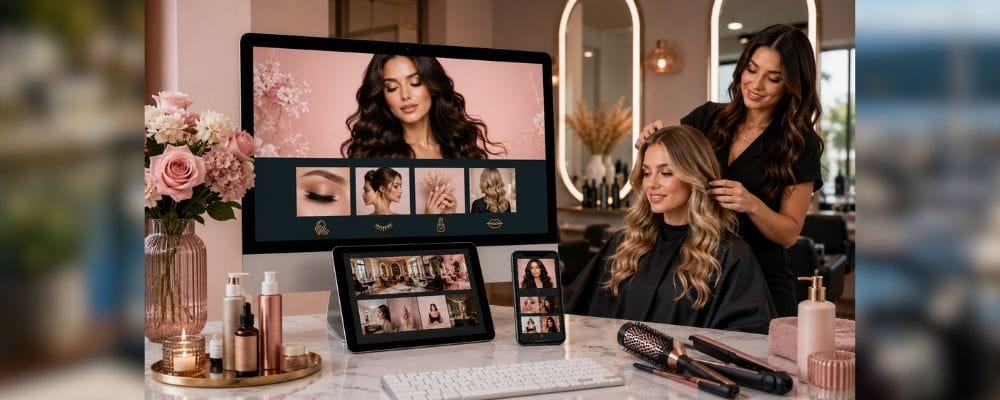
Your Beauty Business Website Collects Browsers, Not Bookings
Here’s what most Tacoma salon, spa, and hair service owners don’t realize: Your website is currently operating in the dark. Potential clients visit your site, explore your services, view your portfolio, read your testimonials, then quietly disappear without ever booking an appointment.
The problem isn’t that your website looks unprofessional. The problem is that your website is designed for someone other than the clients you’re trying to attract. Most beauty service websites fail at one critical moment: the conversion from browser to appointment booker. Clients move through your website, find nothing that removes their hesitation, and select a competitor’s website instead.
The distance between “I want to look good” and “I’m booking an appointment” is wider than most salon owners realize. Your website needs to close that distance methodically, or your business remains stuck competing on price and relying on word-of-mouth referrals.
Why Beauty Services Websites Fail Silently
The psychology of appointment-booking is different from product purchasing or service inquiry. When someone visits a product website, they’re evaluating whether to buy something. When someone visits a beauty services website, they’re evaluating whether to trust someone with their appearance.
Trust is the fundamental currency of beauty services. You’re not selling a product. You’re selling transformation, confidence, and expertise. Your website either communicates that you’re worthy of that trust, or it communicates nothing at all.
A generic website tells potential clients: “We provide haircuts and beauty services.” A strategic beauty services website tells them: “We specialize in transformations for specific aesthetic goals, and here’s visual proof we deliver what we promise.”
Most Tacoma beauty websites fail because they address the transaction (“Book an appointment”) without addressing the trust decision (“Is this the right person to transform my appearance?”). Clients need both before they’ll convert.
The Three Silent Moments When Browsers Leave Without Booking
Moment 1: The Unclear Specialization Evaluation
Beauty clients don’t want a generalist. They want someone who specializes in their specific need: color correction, bridal styling, lash extensions, specific facial treatments, men’s barbering, scalp treatments. When your website suggests you do everything equally well, clients assume you do nothing exceptionally well.
A woman searching for balayage specialists finds your site. Your homepage says “Hair Salon.” She needs to find evidence that you specialize in balayage. She scrolls looking for specificity. She finds generic descriptions. She goes to the next salon’s website. She’s gone.
Moment 2: The Proof Deficit
Clients need visual evidence that you deliver the results they want. A bridal client wants to see wedding hairstyles you’ve created. A spa client wants to see before-and-after skincare results. A lash extension client wants to see lash sets you’ve applied. Portfolio imagery is not decoration,it’s the primary conversion tool for beauty services.
When clients can’t find visual proof of your specific expertise, they experience decision paralysis. Appointment booking requires decision certainty. Absence of proof creates absence of certainty.
Moment 3: The Booking Friction
Even clients who’ve decided to book face unnecessary friction. Online booking systems that are difficult to navigate. Phone numbers that are hard to find. Appointment options that seem limited. Uncertainty about pricing. Unclear cancellation policies. Each friction point is a conversion barrier.
The Solution: Psychology-Driven Beauty Services Website Design
Strategic Positioning: Specialization Over Generalization
Your homepage should immediately communicate what you specialize in. Not everything you do, but what you’re genuinely exceptional at.
What FAILS: “Full-service salon with hair, nails, and skin services”
What WORKS: “Color-specialist salon for dimensional balayage, lived-in tones, and personalized color consultations. We work with adults seeking transformative color that looks effortlessly natural.”
This positioning accomplishes several psychological functions simultaneously. It tells the right clients they’re in the right place. It tells wrong-fit clients to look elsewhere (which is actually valuable). It establishes specialization immediately. It communicates understanding of aesthetic goals, not just services.
Visual Proof System: Portfolio As Conversion Tool
Your portfolio isn’t an afterthought,it’s your primary conversion mechanism. Every image must serve strategic purpose within the client decision journey.
Strategic portfolio structure:
Section 1: Before-and-After Gallery (Immediate visual proof)
- Show actual client transformations
- Use high-quality photography
- Include variety showing range (different hair types, skin tones, starting points)
- Organize by specialty (color, cutting, styling, treatments)
Section 2: Service-Specific Examples (Address specific client concerns)
- Bridal services section with wedding day styling examples
- Color correction section showing challenging color challenges solved
- Textured hair section showing expertise with specific hair types
- Skincare results section showing before-and-after skin transformations
Section 3: Client Testimonial + Image (Social proof with face)
- Show actual clients (with permission) with their transformation
- Include name and specific result achieved
- Combine visual proof with verbal proof
The visual progression accomplishes this: Potential client sees transformation style they want (Section 1), finds specific service matching their need (Section 2), sees someone similar to them achieving that result (Section 3), then they’re ready to convert.
Clarity System: Removing Decision Paralysis
Beauty clients face significant decision paralysis. They’re committing to a change that affects how they look. Your website must reduce uncertainty at each decision point.
What clients need clarity on:
Service Clarity: What exactly happens during this service?
- Service descriptions should be specific, not vague
- “Hair coloring” fails. “Balayage color treatment: hand-painted highlights creating dimensional, lived-in tones with custom color consultation” works.
- Include what’s included (consultation time, color quality, styling) and what costs extra (toning, treatments)
Timeline Clarity: How long will this take?
- “Haircut appointment: 45-60 minutes”
- “Full color service: 90-120 minutes depending on length and complexity”
- “Facial treatment: 50 minutes”
- Include this on service pages and in booking confirmation
Price Clarity: What will this cost?
- Display price ranges or starting prices prominently
- “Custom color: starting at $75” communicates more than “Custom color: call for pricing”
- Note that complex services require consultation for final pricing
- Transparency builds trust more than mystery builds urgency
Process Clarity: What’s the first step?
- Make booking path obvious
- Clear call-to-action button (“Book Appointment” not “Contact Us”)
- Show what happens after booking confirmation
- Reduce steps between interest and appointment
Appointment Friction Elimination
Every obstacle between interest and appointment booking costs you clients.
Essential friction-reduction elements:
Online Booking System
- Integrated calendar showing real availability
- Ability to select specific stylist if client preference matters
- Clear confirmation and reminder emails
- Mobile-friendly booking interface
- Alternative: If online booking isn’t possible, make phone booking obvious (prominent phone number, estimated hold time, best times to call)
Service Provider Information
- High-quality photo of each stylist/esthetician
- Brief bio showing specialty and experience
- Client can request specific provider or see who’s available
- Builds comfort with person who’ll deliver the service
Pricing Information
- Transparent about pricing structure
- Clear what’s included in each service
- Honest about additional costs
- Shows you’re not hiding surprise charges
Cancellation Policy Clarity
- Make policy easy to find
- Explain what happens if client cancels
- Explain what happens if business needs to reschedule
- Reduces booking hesitation from policy uncertainty
Beauty Services Website Elements That Convert
Specialization Portfolio (Not Generic Service List)
Your “Services” page should be organized by specialization, not by service type.
What FAILS:
- Hair Cutting
- Hair Coloring
- Styling
- Hair Treatments
What WORKS:
- Color Specialist: Balayage, Color Correction, Dimensional Highlighting
- Bridal Services: Wedding Day Hair, Bridal Styling, Engagement Shoots
- Textured Hair Expert: Curly Hair Cuts, Coil Treatments, Natural Hair Styling
- Scalp Health: Scalp Treatments, Oil Balancing, Hair Restoration
Each specialization section includes: description of the service, typical appointment length and cost range, examples of results, and direct booking button.
Trust-Building Credentials
Beauty services depend entirely on trust. Credentials communicate expertise before the client ever meets you.
What to display prominently:
Professional Certifications: Color certifications, cosmetology licenses, esthetic certifications, specialized training (Balayage Master, Keratin Specialist, etc.)
Industry Recognition: Awards won, publications featured in, professional affiliations, training from recognized experts
Years in Industry: “15+ years specialized in color correction” communicates more credibility than “Professional colorist”
Continuing Education: Show you’re current in trends and techniques (“Trained in latest balayage techniques 2026”)
Testimonial Strategy Specific to Beauty
Generic testimonials (“Great service!”) fail for beauty businesses. Beauty-specific testimonials should address the actual decision points.
What FAILS: “The staff was nice and professional.”
What WORKS: “I came in with severely damaged hair from previous color treatments. Sarah assessed the damage, created a restoration plan over 3 months, and transformed my hair from straw-like to healthy and beautiful. I finally have hair I’m proud of again. Sarah is a color specialist worth the investment.”
Strong beauty testimonials include:
- Specific problem client had (previous bad experience, damage, desire for change)
- Specific solution provided
- Emotional result achieved (confidence, pride, transformation)
- Specific provider name (builds personal connection)
- Willingness to recommend despite higher price
Before-and-After Image Psychology
Before-and-after imagery is your most powerful conversion tool. Strategic implementation matters significantly.
Strategic positioning:
- Feature most dramatic transformations prominently (above the fold)
- Show range of transformations (different hair types, skin tones, age ranges, starting points)
- Organize by service type so client can find transformations matching their goal
- Use high-quality photography (professional lighting, consistent backgrounds)
- Include brief story with each transformation (“Client came in wanting to go from brunette to blonde safely,we used toning treatments to prevent damage”)
Avoid these mistakes:
- Blurry or poorly lit before-and-after photos
- Inconsistent photography quality or background
- Photos that don’t match client’s hair type or starting point
- Lack of variety showing you work with many client types
Tacoma Beauty Market Positioning
Tacoma’s beauty market has specific characteristics your website should address. The region includes diverse demographics with different aesthetic goals and budgets. Your positioning should acknowledge this specificity.
Geographic positioning:
- Feature Tacoma neighborhood references (Proctor clients, Stadium District clients, Downtown clients all have different aesthetics and budgets)
- Reference local events (weddings, seasonal celebrations) your services support
- Show you understand Tacoma’s climate and how it affects hair and skin care
Related strategic content for beauty businesses: The broader Hyper Effects philosophy addresses conversion psychology that applies directly to appointment-based services. As per Hyper Effects’ approach to website conversion rate optimization, beauty websites succeed when they eliminate decision paralysis and clarify next steps. This same principle applies specifically to beauty services: clients need to see proof before booking.
Additionally, trust-building website strategies are essential for beauty services. When Hyper Effects works with service businesses on web design for service businesses, the same framework applies: specialization over generalization, visual proof over claims, clarity over mystery.
Common Beauty Services Website Mistakes
Mistake 1: Unclear Service Offerings
You offer eight different services, so your website lists all eight equally. Clients seeking specific expertise don’t know if you specialize in their need or just offer it as one of many services.
Fix: Organize services by specialization. Feature your strongest specialties prominently. Be honest about what you’re truly exceptional at.
Mistake 2: Insufficient Visual Proof
Your portfolio has 5 images from a few years ago. Clients can’t assess whether you can deliver their specific transformation.
Fix: Commit to portfolio excellence. Every month, add 5-10 new high-quality before-and-after images organized by service type. Refresh portfolio quarterly to show current trend work.
Mistake 3: Generic Service Descriptions
“Hair coloring services tailored to your needs.” This describes every salon. Clients have no idea what you actually specialize in.
Fix: Write service descriptions that communicate actual expertise. “Custom balayage for dimensional, lived-in blonde tones using hand-painting techniques and professional-grade color with toning treatments to ensure vibrancy and hair health.”
Mistake 4: Difficult Appointment Booking
Clients need to call to book. Wait times are long. No online system. No clear availability shown.
Fix: Implement online booking system integrated with your scheduling software. Make phone number obvious and easy to find. Show estimated wait times for phone booking.
Mistake 5: No Stylist/Esthetician Information
Clients don’t know who will be serving them. No photos, no bios, no way to request preferred provider.
Fix: Feature each team member with professional photo, brief bio, specializations, and years of experience. Allow clients to request specific provider in booking.
Mistake 6: Lack of Transparency on Pricing
“Call for pricing” or vague pricing ranges leave clients uncertain and hesitant to book.
Fix: Display starting prices for each service. Explain what factors affect final pricing. Show you’re not hiding surprise charges.
FAQ: Beauty Services Website Questions
Q: How important is online booking for salons and spas?
A: Critical. Clients increasingly expect online booking availability. Absence of online booking creates friction that converts your competitors. Even if staff ultimately calls to confirm, offering online booking dramatically reduces barriers to conversion.
Q: Should I feature different team members or maintain consistency?
A: Feature your team members prominently with clear information about each person’s specialty and years of experience. Clients building loyalty to specific stylists or estheticians is actually ideal,it increases retention and referrals. Allow clients to request preferred providers.
Q: How do I photograph before-and-afters without violating client privacy?
A: Always request permission before photographing client transformations. Provide release forms. Offer incentives (discounts on next service) for allowing photography. Feature clients who are comfortable being featured. For those who prefer privacy, get written permission before using images.
Q: How often should I update my portfolio?
A: Continuously. Add 5-10 new images monthly. Refresh featured work quarterly to demonstrate current trends. Outdated portfolio suggests you’re outdated on techniques.
Q: Should pricing be the same for different stylists with different experience levels?
A: Transparency here matters. Some salons charge differently based on stylist experience. Others charge the same regardless. Whichever approach you take, be clear about it on your website. Don’t create surprises at checkout.
Q: How do I handle negative reviews on Google?
A: Respond professionally and compassionately. Address legitimate concerns. Invite dissatisfied clients to discuss offline. Demonstrate you care about client experience. Don’t ignore negative reviews or respond defensively.
Expected Results: Building Conversion-Focused Beauty Website
Current state:
- Website gets traffic but limited bookings
- Clients contact competitors instead
- Reliant on word-of-mouth referrals
- Staff spends time managing inquiry calls instead of serving clients
After implementing conversion-focused design:
- Clients book directly through online system
- Portfolio proves you can deliver their transformation
- Specialization clarity attracts right-fit clients
- Appointment booking friction eliminated
- Staff time freed from managing inquiries to focus on service delivery
Measurable impact:
- 25-40% increase in online bookings
- Higher average appointment value (right-fit clients willing to invest)
- Reduced no-show rate (clients with booking confirmation invest commitment)
- Increased referrals (satisfied clients tell others about your specific expertise)
Taking Action: Your Beauty Services Website Strategy
Your website is currently operating in the dark, collecting browsers without converting them to appointments. The solution isn’t more traffic,it’s removing the conversion barriers that prevent existing visitors from booking.
Schedule a free beauty services website strategy consultation with Hyper Effects to evaluate whether your website is actually converting browsers into booked appointments, identify specific friction points preventing conversion, and develop a clear roadmap for transforming your website into a 24/7 appointment booking system.
This consultation determines whether you’re currently leaving thousands in revenue on the table through conversion friction, and exactly what changes would eliminate that friction.
Related Content for Tacoma Beauty Businesses
- Website Conversion Rate: What’s Normal for Tacoma Businesses? — Understand what conversion benchmarks mean for appointment-based services
- How Tacoma Customers Make Decisions: Local Psychology — Beauty client decision-making psychology specific to Tacoma market
- Website Analytics for Tacoma Business Owners: What Actually Matters — Measure whether your beauty website is converting
- Service Business Web Design for Tacoma: Generate Qualified Leads — Principles that apply specifically to appointment-based services
- The Cost of NOT Having a Professional Website — Understanding the revenue impact of conversion friction
- Proctor District Web Design: Digital Strategy for Tacoma’s Most Affluent Neighborhood — Affluent beauty market positioning in high-income neighborhoods
- Stadium District Web Design: Digital Strategy for Tacoma’s College-Connected Neighborhood — Reaching younger demographics seeking beauty services