
OLYMPIA’S LANDSCAPING WEBSITES SERVE NOBODY IN PARTICULAR
Most landscaping companies in Olympia face the same silent crisis. When it rains from November through March, and Olympia averages 56 inches of annual rainfall, people think about landscape maintenance, drainage solutions, and seasonal property care. They search for local answers. Your website exists, though, collecting digital dust instead of capturing those rain-season customers.
The real problem isn’t the lack of customers. Olympia’s professional market, government agencies, non-profits, corporate campuses, and property management companies, generates consistent maintenance contracts year-round. Homeowners managing Olympia properties understand that landscaping requires different expertise depending on the season. What’s missing is a website that speaks to this local understanding rather than generic, templated messaging that applies nowhere specifically.
Here’s what happens instead: A potential customer from Olympia searches “landscaping services Olympia” or “landscape maintenance during rainy season.” Your website appears but sounds like it was built in California. No mention of Olympia’s wet winters, no showcase of drainage solutions for Puget Sound properties, no evidence that you understand the Nisqually waterway region’s unique soil and plant requirements. The visitor leaves within seconds. That contract goes to someone else.
A website without local authority quietly loses customers before they ever call.
WHY OLYMPIA’S CLIMATE DEMANDS A DIFFERENT APPROACH
Olympia’s landscaping market is fundamentally different from other parts of Washington or the Pacific Northwest. This difference isn’t minor, it changes everything about how your website should work.
The Wet Season Reality (November–March)
Olympia experiences its peak rainfall between November and March, which means property damage risk spikes during the same months when landscaping businesses typically slow down. Homeowners and property managers face visible problems: standing water, eroding beds, failing drainage, dying plants from waterlogging. The window for emergency landscape intervention exists at exactly the moment most landscaping websites go dormant.
As per Washington’s Department of Ecology regional climate data, Thurston County (where Olympia is located) experiences a distinct maritime climate pattern that creates both opportunity and specialization need. Puget Sound proximity means high rainfall combined with specific soil composition challenges. Native plants that thrive elsewhere fail in Olympia conditions without the right installation and maintenance knowledge.
Government & Institutional Client Market Opportunity
Olympia’s economy is dominated by state government employment (23% of all jobs). Add education sector presence (Evergreen State College, South Puget Sound Community College), healthcare institutions, and a substantial non-profit sector, and you’re looking at a professional client base that values long-term contracted landscape maintenance over one-time residential projects.
This market doesn’t search casually. They source contractors through credibility signals: portfolio examples of institutional work, proven expertise in large-scale systems management, sustainability practices that align with their values, compliance knowledge, and seasonal planning strategy. Your website either demonstrates these things immediately, or the procurement team moves to the next option.
Sustainability Standards in Olympia’s Professional Market
Olympia residents voted to create Inspire Olympia, a city-level initiative funding arts and cultural work because the community values creativity and environmental stewardship as essential. This values framework extends to how Olympia’s professional market evaluates landscape contractors. Native plant expertise, reduced chemical use, stormwater management systems that support ecological health, partnership with local environmental organizations, these aren’t nice-to-haves. They’re expectations.
A landscaping website that ignores sustainability signals explicitly tells Olympia’s buyers: “This company doesn’t understand what matters here.”
THE SOLUTION: BUILD YOUR WEBSITE TO ALIGN WITH OLYMPIA’S SEASONAL CYCLES, LOCAL EXPERTISE, AND PROFESSIONAL STANDARDS
A high-performing landscaping website in Olympia stops trying to sound generic and starts functioning like a seasonal authority system. This means your website does specific work that generic landscape sites don’t:
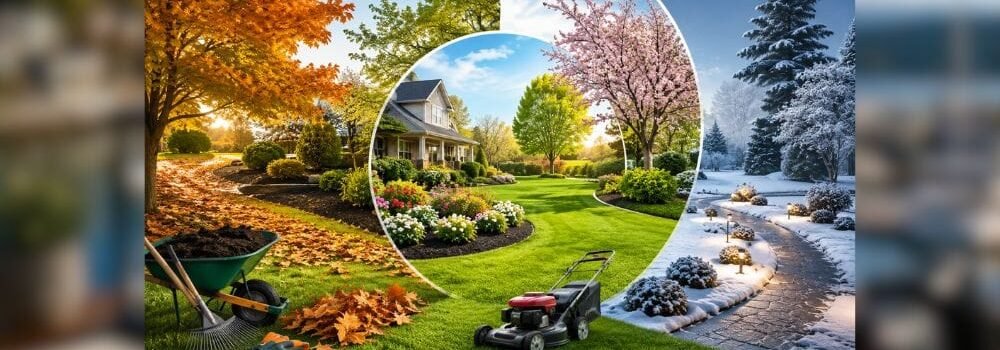
1. SEASONAL MARKETING ARCHITECTURE: GUIDE VISITORS TO THEIR EXACT NEED
Your website should segment content and offerings by the actual seasonal cycles Olympia property owners experience. This is not decoration. This is decision clarity.
Wet Season Content (November–March): Drainage solutions, waterlogging prevention, storm damage response, seasonal plant protection, property assessment services. A visitor who lands in January with standing water in their yard needs to know immediately that you solve this specific problem, not that you do general landscaping.
Spring Preparation (April–May): Mulch renewal, spring planting, bed preparation, irrigation system checks, seasonal cleanup from winter damage. This content answers: “What do I do now that winter is ending?”
Summer Maintenance (June–August): Plant health management during dry season, irrigation optimization, pest prevention specific to dry conditions, hardscape maintenance. This content acknowledges that Olympia’s brief dry season requires different care than the wet months.
Fall Transition (September–October): Fall cleanup preparation, plant winterization, drainage system inspection before heavy rains, seasonal planting for fall color. This bridges to the wet season and creates urgency around preparation.
Each season gets dedicated landing pages, case studies from similar seasonal work, and clear calls-to-action aligned to the visitor’s immediate seasonal need. This approach removes decision paralysis. When someone searches “drainage fix Olympia winter rain,” they land on a page that addresses exactly their situation, with portfolio examples of Olympia homes where drainage was solved, customer results, and a clear path to getting a consultation.
This is different from the generic “We do landscaping” message that loses them.
2. LOCAL AUTHORITY: DEMONSTRATE OLYMPIA-SPECIFIC EXPERTISE, NOT TEMPLATES
Built on Understanding Olympia’s Professional Market Structure
Professional buyers in Olympia evaluate contractors through credibility signals. Your website must show that you understand government procurement, institutional project management, non-profit budgeting constraints, and sustainability compliance expectations. This manifests as:
- Case studies featuring institutional clients: A government building renovation with landscape redesign. A non-profit with improved site drainage that reduced maintenance costs. A property management company serving multiple Olympia addresses. These examples prove you’ve operated at this level.
- Visible expertise in large-scale systems: Not just individual yards, but how you approach master planning for properties with multiple zones, water management systems, and long-term maintenance protocols.
- Government compliance knowledge: Washington State environmental requirements, Thurston County stormwater management standards, ADA accessibility in landscape design. Mention these specifics on your website so government procurement teams see you understand their constraints.
Grounded in Puget Sound Ecology, Not Generic Northwest Expertise
Olympia’s native plant palette, soil conditions, and stormwater challenges differ from Seattle, Tacoma, or rural Kitsap County. A website that shows deep expertise in Olympia-specific conditions separates you from contractors who sound knowledgeable everywhere but expert nowhere.
This means:
- Explaining which native plants thrive in Olympia’s wet winters without drowning (Red-flowering currant, Oregon grape, sword fern, plants that work here specifically)
- Addressing Nisqually-region soil composition and how it affects drainage and plant selection
- Demonstrating knowledge of Puget Sound flooding patterns and how that shapes landscape grading decisions
- Showing understanding of Thurston County’s environmental regulations around stormwater management
Include a “Local Expertise” section that reads like this: “Olympia properties face challenges unique to South Puget Sound. Standing water in winter, rapid drainage in summer, native plant palette requirements, and government stormwater regulations demand expertise built on years of Olympia-specific work. Our portfolio shows this expertise across institutional, commercial, and residential projects.” This isn’t bragging. It’s specificity that removes doubt.
3. DEMONSTRATE SUSTAINABILITY ALIGNMENT, IT’S NOT OPTIONAL IN OLYMPIA
Olympia explicitly values sustainable business practices, environmental stewardship, and community contribution. A landscaping company that ignores this is sending the message: “This business doesn’t understand what Olympia cares about.”
Your website should include:
- Sustainability practices section: Native plant focus (why they matter for Olympia), water conservation through intelligent irrigation design, integrated pest management (avoiding chemical runoff into Puget Sound), carbon footprint reduction through local sourcing and crew organization
- Environmental partnership examples: If you partner with local conservation groups, use them as endorsement. Reference Nisqually Indian Tribe stormwater initiatives, Billy Frank Jr. Nisqually National Wildlife Refuge stewardship guidelines, or Thurston County environmental programs your work supports
- Certification visibility: If you’re trained in sustainable landscape practices, water-wise plant selection, or environmental compliance, display these credentials. Olympia’s professional market actively searches for these signals
- Community impact angle: Show how your work benefits the broader Olympia ecosystem. Landscape projects that improve stormwater runoff reduce pressure on public systems. Native plantings increase local pollinator populations. Proper drainage prevents property damage that leads to abandoned sites. Connect your work to community benefit
This isn’t additional marketing. This is alignment with what Olympia’s decision-makers actually value.
4. PORTFOLIO STRATEGY: SHOWCASE OLYMPIA ADDRESSES, NOT GENERIC LANDSCAPES
Your portfolio section should feature Olympia properties almost exclusively. Show:
- Government/institutional projects: The state building with landscape redesign. The non-profit campus with improved drainage. The administrative facility with native plant conversion
- Commercial property management: Multi-unit residential complexes in Olympia. Commercial properties on Capitoline Way or downtown. Properties managed by Olympia-based management companies
- Residential case studies showing seasonal problem-solving: “Before and after” of wet-season drainage solutions. Winter storm recovery. Spring turnover projects. Summer maintenance under dry conditions. This tells the story of year-round expertise
- Process documentation: Don’t just show the finished landscape. Show the design process, the challenges addressed (Olympia-specific drainage issues, for example), and how the solution was engineered for local conditions
Every portfolio item should identify the Olympia location and describe the specific challenge solved. This grounds your expertise in place.
5. WEBSITE SYSTEMS FOR SEASONAL MARKETING AUTOMATION
Your website should function as a 24/7 marketing engine that captures the right customer at the right seasonal moment, without requiring you to manually manage everything. This reduces overhead while increasing consistency.
Seasonal Landing Pages That Activate by Date
Your website homepage intelligently displays different primary messaging depending on the season:
- November–March: “Winter Damage Prevention & Drainage Solutions” prominently featured, with emphasis on emergency response availability
- April–May: “Spring Refresh & Preparation” messaging, planting season emphasis
- June–August: “Summer Maintenance & Optimization” focus
- September–October: “Fall Preparation & Winterization” messaging
Visitors arriving in January see winter-relevant solutions. Visitors arriving in May see spring services. No confusion. No scrolling through irrelevant seasons.
Seasonal Content Calendar Feeding Social Platforms
Your website powers your social media presence through automated scheduling. Your website blog publishes seasonal content (winter drainage tips, spring planting guide, summer watering schedule, fall prep checklist), and this content automatically distributes to LinkedIn, Facebook, Instagram, and other platforms you target. As per the principle of a unified website system, you post once to your website and reach all platforms through automation, eliminating the need for expensive social media management.
This keeps you visible year-round without manual weekly posting.
Lead Capture Systems Aligned to Season
Your contact/consultation form should be smart about what it captures. In winter, it asks about drainage problems. In spring, it asks about installation scope. Forms adapt to the season, making the consultation request feel personally relevant rather than generic.
HOW THIS DIFFERS FROM TACOMA & OTHER SERVICE TRADES
As referenced in similar strategy for the HVAC services website model for Olympia seasonal marketing, the landscaping opportunity in Olympia follows the same principle: seasonal market cycles create predictable customer needs, and a website that addresses those cycles at the moment they arrive captures business competitors miss.
The landscaping market shares this timing opportunity with other trades like roofing services (storm season), plumbing, and electrical services, but landscaping has the additional advantage of sustainability positioning, something that matters more to Olympia’s values-aligned market than to price-focused Tacoma customers.
THE BUSINESS OUTCOME
When your landscaping website aligns with Olympia’s seasonal cycles, demonstrates local expertise, and reflects community values, three things change:
- Seasonal Lead Capture: You capture customers searching right now during their urgent moment, not months later when the need has passed or they’ve hired someone else
- Professional Market Positioning: Institutional buyers see evidence of large-scale project management, compliance knowledge, and sustainability alignment. Government procurement shifts toward your company
- Referral Generation: Satisfied customers in Olympia’s tight-knit community (government employees, non-profit networks, professional service providers) refer you within their circles because your work demonstrates understanding of local conditions and values
The website stops being a brochure collecting dust. It becomes a system that continuously captures customers aligned to seasonal need, guides them to your specific services, and positions you as the local authority.
FREQUENTLY ASKED QUESTIONS
- What Landscaping Services Should I Focus on During Olympia’s Wet Season?
Drainage solutions, seasonal plant protection, storm damage cleanup, waterlogged soil remediation, and wet-weather property assessments. Olympia’s November-March rainfall creates urgent customer need for these services specifically.
- How Do Native Plants Help Landscaping in Olympia?
Native plants thrive in Olympia’s wet climate without requiring chemical inputs, reduce stormwater runoff problems, support local pollinators, and align with community sustainability values that Olympia buyers actively seek in contractors.
- Can a Landscaping Website Really Drive Seasonal Customers?
Yes. When your website features seasonal-specific content, addresses the customer’s immediate seasonal need, and demonstrates local expertise, it captures customers at the moment they search for help, creating year-round lead flow.
- What Makes Olympia’s Landscaping Market Different from Seattle or Tacoma?
Olympia’s government-dominated economy creates institutional client opportunities, professional buyers evaluate sustainability practices heavily, and the Puget Sound climate creates unique drainage and plant-selection challenges that demand local expertise.
- How Should a Landscaping Company Show Sustainability on Their Website?
Feature native plant focus, water-conservation irrigation design, integrated pest management practices, environmental partnerships, relevant certifications, and explain how landscape work benefits community stormwater and ecosystem health.
RECENT RELATED ARTICLE FROM HYPER EFFECTS
The HVAC services seasonal marketing strategy for Olympia shares this exact principle with landscaping and other service trades. Professional buyers across sectors, government, institutional, commercial, use the same evaluation criteria: local expertise, seasonal understanding, sustainability alignment, and proof of work.
If you’re a landscaping company in Olympia and your website doesn’t address these elements, you’re competing on price alone. Shift to demonstrating value through alignment with local need, seasonal expertise, and community values.
WHAT OLYMPIA LANDSCAPING COMPANIES SHOULD DO NOW
- Audit your current website: Does it mention Olympia-specific conditions? Does it address seasonal cycles? Does it showcase institutional/government projects? If the answer is no to any of these, your website is losing business
- Rebuild portfolio around Olympia locations: Pull generic landscaping photos. Replace with real Olympia properties, local addresses, and seasonal problem-solving examples
- Create seasonal content strategy: Write a blog post per season addressing Olympia-specific customer needs (winter drainage guide, spring planting checklist, summer maintenance schedule, fall prep strategy)
- Highlight sustainability practices: Get specific about native plants, water conservation, environmental compliance. Connect your work to Olympia values
- Develop professional buyer positioning: Create case studies or pages specifically addressing government/institutional clients. Demonstrate procurement understanding, compliance knowledge, large-scale project management
The landscaping market in Olympia rewards specificity. Build a website that understands Olympia’s seasons, climate, professional market, and values. That website becomes your 24/7 sales engine instead of a website collecting digital dust.
NEXT STEP: GET A WEBSITE AUDIT
If you’re ready to understand whether your current landscaping website is capturing Olympia’s seasonal customers or losing them to competitors, reach out for a free consultation.
At Hyper Effects, we specialize in building websites that function as 24/7 sales systems for Olympia’s service businesses. We understand local market dynamics, seasonal business cycles, and how to position professional buyers to choose you.
Get your landscaping website working for Olympia. Let’s talk.